



Parenting as a Team: Dividing Responsibilities Gracefully
by Elsa Oguya
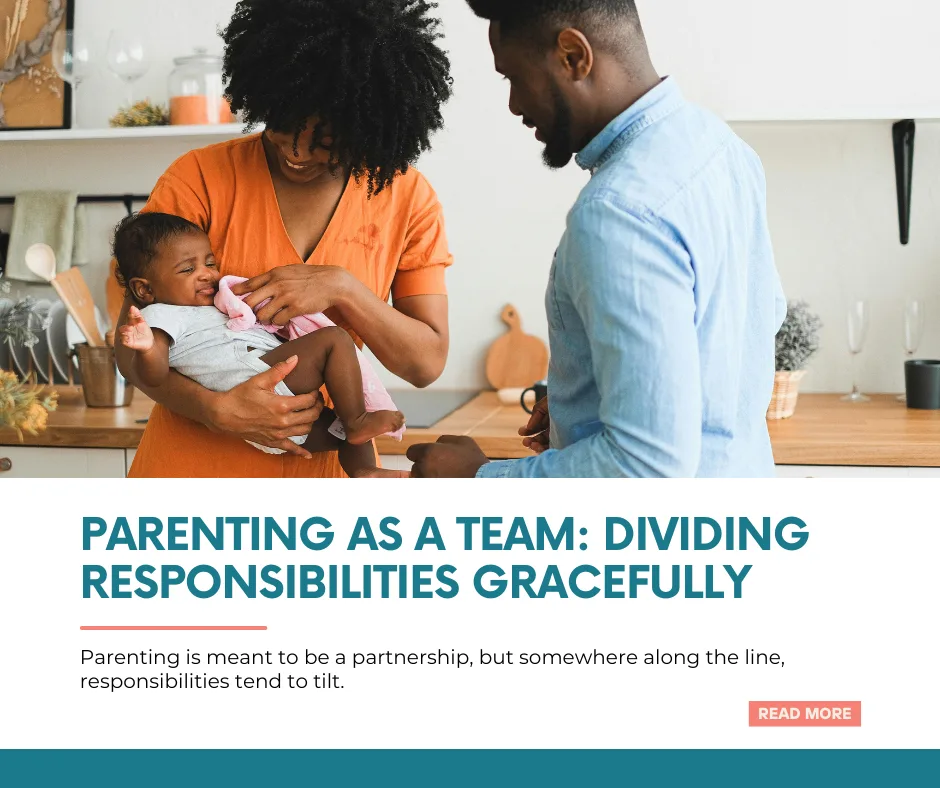
There is this topic taking over the internet that can no longer be ignored. The craze about being the default parent and how it can be draining. Every scroll on social media seems to have a post, a meme, or a reel about the “default parent”, usually the one who knows the baby’s feeding schedule, the child’s favourite cup, the school’s closing time, and even where the spare diapers are kept.
It’s the parent who carries the invisible checklist of daily tasks in their mind, the one constantly planning, anticipating, and making sure everything runs smoothly. And while the internet may make jokes about it, behind the humour is a deeper truth: parenting can feel unbalanced when one person carries most of the mental and emotional load.
How Parenting Responsibilities Tend to Tilt on One Parent
Parenting is meant to be a partnership, but somewhere along the line, responsibilities tend to tilt. Sometimes it’s because one parent takes longer maternity or paternity leave, works from home, or perhaps one is just naturally more detail-oriented.
Before long, the imbalance becomes normal, not necessarily intentional, but real. The other parent may still help, but the weight of organisation, anticipation, and remembering everything often falls on one person. This uneven split can easily lead to exhaustion, resentment, or feelings of being undervalued, even in loving relationships.
Many parents fall into unspoken roles without ever agreeing to them. One parent just “becomes” the one who packs school bags, while the other handles finances or car maintenance. The challenge comes when these roles become invisible expectations. Suddenly, it’s not just the physical tasks that are exhausting, but the mental to-do list, the constant reminders, the scheduling, the thinking ahead. This is what makes the concept of the “default parent” hit home for so many. It’s not only about doing things, but about always having to remember to do them.
Related: What to Do When You and Your Partner Disagree About Parenting
Parenting as a Team Doesn’t Mean a 50-50 Split
Dividing responsibilities gracefully doesn’t mean creating a rigid 50-50 split. Parenting is far too dynamic for that. Instead, it’s about fairness, communication, and flexibility. It’s about recognizing that both parents are equally responsible for their children’s care, not just physically, but emotionally and mentally too.
Grace comes in when partners can have honest conversations without blame. Maybe the dad excels at planning meals while the mum enjoys bedtime routines. Perhaps one parent takes the lead on school matters while the other handles health appointments. The goal is not to compete, but to complement each other.
How to Divide Parenting Responsibilities Gracefully
The truth is, no parent should feel like the household manager while the other acts like an assistant. A healthy family dynamic grows when both parents acknowledge the invisible labour involved and take intentional steps to balance it.
1. Trading Tasks Occasionally
This might mean trading tasks occasionally, even just for empathy. For instance, if one usually prepares the kids for school, switching roles for a week can help both parents understand what it really takes. Similarly, involving both parents in decisions about childcare, feeding, or school activities ensures that neither one becomes the sole decision-maker by default.
2. Maintaining Consistent Communication
Teamwork in parenting doesn’t happen automatically. It requires consistent communication, appreciation, and sometimes even resetting expectations. Life with children is unpredictable, one parent may need to step up more during certain seasons, and that’s okay. What matters is ensuring that those seasons don’t stretch indefinitely. A simple check-in can go a long way: “How are you coping this week?” or “Is there something I can take off your plate?” These small gestures can make the difference between feeling alone and feeling supported.
3. Letting Go of Perfection
Another key part of parenting teamwork is letting go of perfection. Often, the default parent hesitates to delegate because they fear things won’t be done “right.” But perfection can become a barrier to balance. Allowing your partner to do things their way, even if it’s not exactly how you would, builds trust and reduces mental load. Sometimes, it’s better to have a partner who participates imperfectly than one who doesn’t participate at all.
4. Celebrating Each Other’s Efforts
Parenting as a team also means celebrating each other’s efforts. Saying thank you, even for the small things, reinforces the sense of partnership. Gratitude softens the edges of exhaustion and keeps resentment at bay. Both parents need to feel seen, valued, and respected for their contributions, whether it’s soothing a fussy baby at 3 a.m. or working long hours to provide stability.
5. Seek Professional Support for Parenting as a Team
If these steps don’t seem to work and one parent still feels like they carry a lot of the parenting, you can also seek professional help. A parenting counselor can help you and your partner see the invisible work each of you does, address any build-up resentment over responsibilities, and build systems that don’t rely on guilt or blames. Sometimes we all need some bit of professional support and it’s not weak to speak with an expert.
Conclusion
The “default parent” conversation has opened up an important dialogue about shared responsibility and emotional labour in families. It’s no longer enough to divide chores. Parenting as a team also requires a shared mindset that understands it’s not about who does more, but how both parents show up together.
When responsibilities are shared gracefully, children grow up witnessing cooperation, empathy, and respect in action. And in the end, that’s one of the greatest lessons any parent can give.
Our goal at Malaica Maternity Hospital remains to provide postpartum support for you and your baby through holistic and personalized postnatal care. Besides routine clinical assessments, we provide access to an online community of newborn mums where you can share and receive parenting tips, a virtual psychologist for parenting mental health support, and a 24/7 hotline in case of an emergency.