


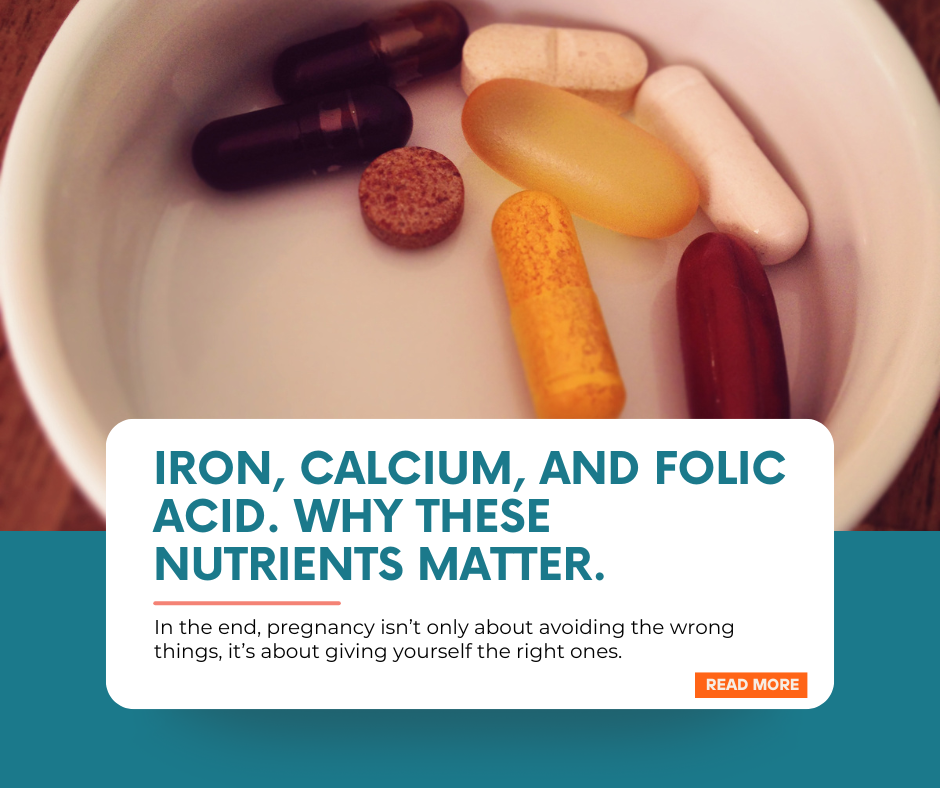
The dos and don’ts of pregnancy are already a long list, and here comes more things you need too. Iron, calcium, and folic acid.
You’ve probably heard these words thrown around at every prenatal appointment or seen them printed boldly on supplement bottles. But do you really know why these nutrients matter so much during pregnancy?
Pregnancy is not just about eating for two; it’s about nourishing your body to sustain a new life while keeping yourself healthy and strong. Iron, calcium, and folic acid nutrients during pregnancy play vital roles in your baby’s growth and your overall well-being throughout the nine months.
Iron During Pregnancy
Pregnancy increases your blood volume by almost fifty percent. That means your body needs more red blood cells to carry oxygen to both you and your growing baby. Iron is the key ingredient in hemoglobin, the protein in red blood cells that transports oxygen.
Without enough iron, you risk developing anemia, a condition where your blood doesn’t have enough healthy red cells. This can leave you feeling tired, dizzy, weak, and breathless.
Severe anemia can even lead to complications like preterm birth and low birth weight. During the first few months of pregnancy, your baby depends on your iron stores for the first few months after birth, so it’s important to keep your levels up throughout pregnancy.
Foods Rich in Iron for Pregnancy Diet
Iron-rich foods are readily available in Kenya and they include:
- Red meat
- Chicken
- Fish
- Beans
- Lentils
- Spinach
- Kales
- Iron-fortified cereals
To ensure your body absorbs iron effectively during pregnancy, remember to pair the above foods with something rich in vitamin C like oranges, strawberries, or tomatoes.
Additionally, do not take the iron supplements with tea or coffee because they block or slow down absorption. Avoid consuming high-calcium foods at the same time as iron as well because they tend to compete for absorption in the body.
Related: What to Eat and Avoid During Each Trimester: Advice From a Maternal Health Nutritionist
Calcium During Pregnancy
Most moms assume calcium only matters for strong bones but its role during pregnancy is much bigger.
Calcium is important during pregnancy for:
- Formation of your baby’s bones and teeth
- Supporting muscle function
- Aiding in nerve signaling
- Regulating your baby’s heart rhythm.
When your diet doesn’t provide enough calcium, your body draws it from your bones to supply the baby’s nutrient needs. Over time, that can weaken your bones and increase your risk of osteoporosis later in life. This is why it’s crucial to keep up with your calcium intake during pregnancy by both supplements and foods you consume.
Examples of Foods Rich in Calcium for Pregnancy
You can get calcium from every-day Kenyan foods, such as:
- Dairy products like milk, yogurt, and cheese
- Tofu
- Almonds
- Sesame seeds
- Sardines
- Dark leafy greens
- Fortified plant milks
- Orange juice
For most pregnant women, the recommended intake of calcium is around 1,000 milligrams per day.
During pregnancy, and especially in the later stages, your body becomes more efficient at absorbing calcium, so even small, consistent amounts can make a big difference.
Related: Pregnancy Meal Planning for Busy Moms
Folic Acid During Pregnancy
Also known as the hero of early pregnancy, folic acid, the synthetic form of folate (a B vitamin), plays a crucial role in cell division and the formation of DNA.
Its most important job, however, happens in the very early weeks of pregnancy, often before you even know you’re pregnant. Folic acid helps form the neural tube, which later develops into the baby’s brain and spinal cord. Without enough folic acid, there’s a higher risk of neural tube defects such as spina bifida and anencephaly.
That’s why health professionals recommend that women who are planning to get pregnant start taking folic acid supplements even before conception and continue to do so throughout the first trimester. The recommended intake amount is usually 400 micrograms daily.
Foods Rich in Folic Acid for Pregnancy Diet
Foods rich in folate include:
- Leafy greens
- Citrus fruits
- Avocados
- Beans
- Fortified grains
Still, it’s hard to get enough folic acid from food alone, which is why your doctor or nurse midwife will recommend supplements as early as pregnancy week 1.
Do I Need All the Three Supplements?
You might be wondering, why can’t one good prenatal supplement just cover it all? In many cases, it can, but not all nutrients are absorbed equally.
Some women need higher doses due to individual factors like anemia, multiple pregnancies, or dietary restrictions. For instance, vegetarians and vegans may require extra iron or B12 support.
The key is not to self-medicate but to follow your doctor’s guidance. Too much iron can cause constipation and stomach discomfort, while excessive calcium can interfere with iron absorption or even lead to kidney stones. It’s a delicate balance, and your body’s needs shift as your pregnancy progresses.
Ask About the Right Prenatal Supplements at Malaica Maternity Hospital
Iron, calcium, and folic acid form the backbone of a healthy pregnancy. Iron fuels your body’s oxygen supply, calcium strengthens your bones and your baby’s growing skeleton, while folic acid safeguards your baby’s earliest development.
Together, they form a trio of protection, strength, and growth. Skipping them isn’t just skipping vitamins; it’s denying your body the tools it needs to build a new life safely and sustainably. The supplements will also boost your immunity and protect you and your baby from illnesses and infections.
Your antenatal care appointments at Malaica Maternity Hospital include an expert nutritionist who has specialized in maternal health care to ensure you’re getting the holistic support you need for a healthy pregnancy.
Call or send us a message at +254 746 610643 to learn how we can empower your journey with routine clinical assessments and more. You can also fill out and submit our online booking form and we’ll call you back.