



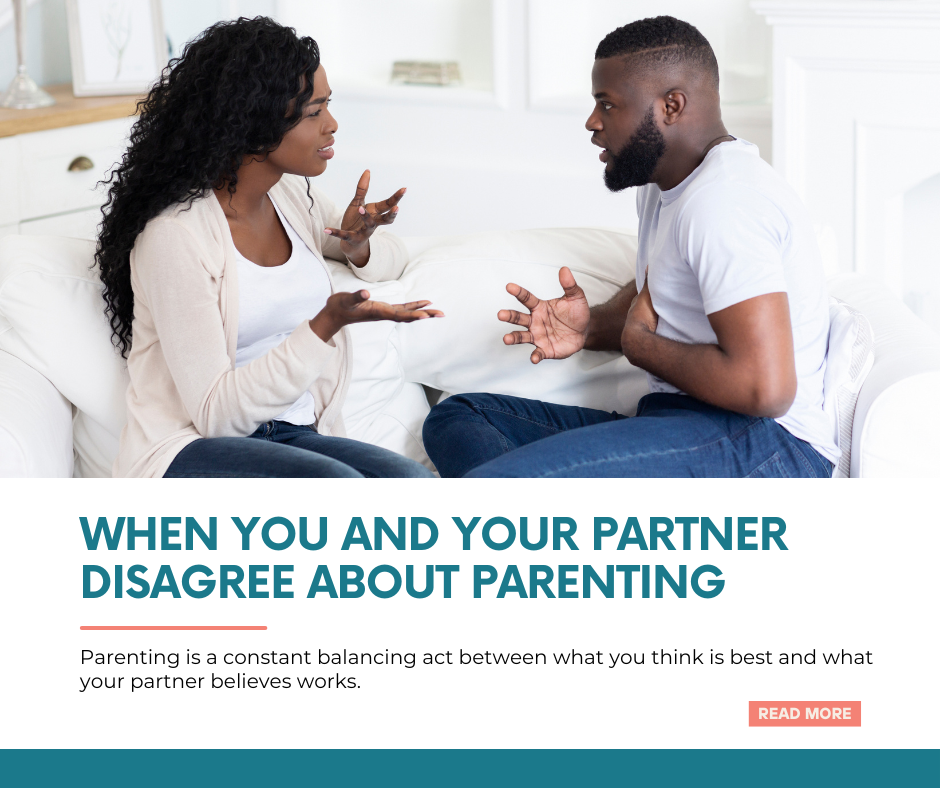
It’s normal not to see eye to eye, especially when it comes to parenting.
You both came into this partnership with different upbringings, beliefs, and experiences that shaped how you view the world and how you think children should be raised. One of you may believe in firm boundaries, the other in gentle parenting. One may think screen time is harmless in moderation, but the other might see it as the root of all meltdowns. And when those worlds collide, even small disagreements can start to feel like full-blown conflicts.
Parenting is a constant balancing act between what you think is best and what your partner believes works. The truth is, no couple agrees on everything. What matters most isn’t the disagreement itself but how you handle it. When handled thoughtfully, differences can actually strengthen your relationship and give your child a well-rounded foundation.
The first step is acknowledging that both of you are trying to do what’s right for your child. Disagreements often become heated when one partner feels unheard or dismissed. Instead of aiming to win the argument, focus on understanding where the other person is coming from. Ask questions like, “What makes you feel this approach works better?” or “What’s your biggest concern about my way?” Listening doesn’t mean agreeing it means showing respect and empathy.
Sometimes, your disagreements will stem from deeper emotional roots. Maybe one of you grew up in a strict home and vowed never to repeat that, while the other believes firm discipline builds character. Recognizing those emotional triggers can help you step out of defense mode and find common ground. Parenting is not about replicating or rejecting your own childhood it’s about building something new together.
Communication is everything. Try to have these conversations when you’re calm, not in the middle of a disagreement or when your child is watching. Kids are incredibly perceptive they notice tension, tone, and body language. Arguing in front of them can create confusion and anxiety, especially when they realize you disagree about them. If a topic feels too charged, agree to revisit it later. You’re on the same team, even when it doesn’t feel like it.
It also helps to divide areas of leadership based on each other’s strengths. If your partner is better at handling routines and schedules, let them take the lead there. If you’re more attuned to emotional cues or school matters, take charge in that space. Sharing responsibilities isn’t about giving up control, it’s about trusting that both of you bring something valuable to the table.
Compromise will be your best friend. Sometimes, that means meeting halfway: you might allow more screen time on weekends if your partner agrees to stricter limits on weekdays. Or maybe you both decide to try each other’s method for a week and observe what works best. The goal isn’t perfection, it’s consistency. Children thrive when parents present a united front, even if that front took some work to build behind the scenes.
And if you ever reach a point where your disagreements feel repetitive or emotionally draining, consider seeking outside help. A family counselor or parenting coach can offer a neutral perspective and tools to help you communicate more effectively. It’s not a sign of failure; it’s a sign of commitment to your family’s well-being.
Most importantly, give each other grace. You’re both learning, sometimes fumbling, and figuring out how to raise tiny humans in an ever-changing world. There’s no single right way to parent, and what works for one family might not work for another. What matters most is that your children see love, respect, and teamwork between their parents.
At the end of the day, you don’t have to agree on everything; you just need to agree that you’re in this together. Because parenting isn’t a competition between two philosophies; it’s a lifelong partnership built on compromise, patience, and the shared goal of raising happy, grounded kids.