



The Truth About Sleep Training Your Baby
by Elsa Oguya
Ever watched those episodes of Supernanny and how she manages to put the house in order in less than an episode? It’s impressive, right? From bedtime chaos to quiet slumber, it seems like magic.
But in real life, bedtime battles aren’t solved in 45 minutes, and most parents don’t have a camera crew or a parenting expert on speed dial. Sleep training is one of those topics that can make even the calmest parent break into a cold sweat, not because it doesn’t work, but because there’s so much conflicting advice out there.
So, what’s the truth about sleep training? Do you have to let your baby cry it out until they fall asleep? Are there gentler, more compassionate ways that actually work? Let’s unpack it.
What Is Sleep Training?
Sleep training simply means teaching your baby or toddler how to fall and stay asleep independently. Contrary to popular belief, it doesn’t have to mean leaving your child to cry alone for hours. It’s about helping them learn the skill of self-soothing, something that, like walking or talking, takes time and practice.
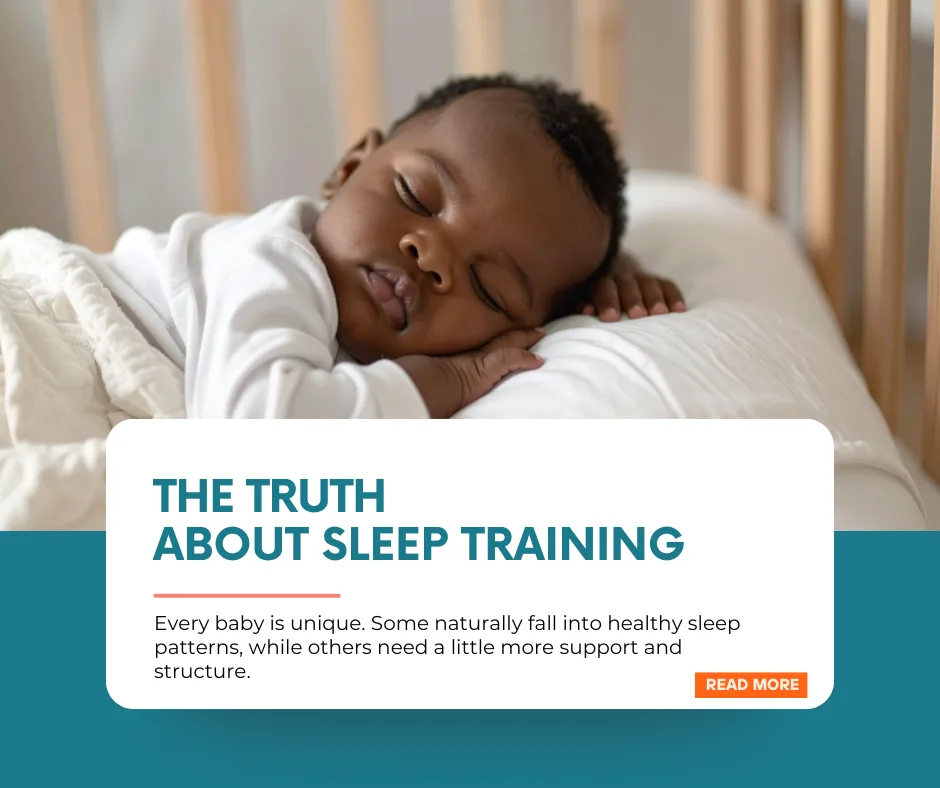
Every baby is unique. Some naturally fall into healthy sleep patterns, while others need a little more support and structure. The key is understanding your baby’s temperament, your parenting style, and your family’s lifestyle.
Why Does Sleep Training Your Baby Matter?
Its simple! Good sleep is essential for everyone, especially for growing babies and exhausted parents. Adequate sleep helps babies develop cognitively, emotionally, and physically. For parents, better sleep means improved mental health, patience, and the ability to show up fully during the day.
Without proper sleep, even the simplest tasks can feel overwhelming. Sleep deprivation can lead to postpartum mood disorders, increased anxiety, and even strained relationships. So, sleep training, when done gently and with empathy, is not just about getting a full night’s rest but also an act of love and care for the entire family.
Common Myths About Sleep Training Your Baby
Before we let you know how to properly go about it, there are some myths making rounds that might stain your perception of sleep training.
Myth 1: Sleep Training Means “Cry It Out”
This is probably the biggest misconception. The “cry it out” method, also known as extinction, is just one approach. There are gentler techniques that involve comforting your baby and gradually teaching them independence.
Myth 2: Sleep Training Damages Attachment
When done responsively, sleep training does not harm your bond with your child. In fact, helping your baby get consistent rest can make both of you more relaxed and emotionally attuned during waking hours.
Myth 3: You Should Start Sleep Training as Early as Possible.
Newborns who are under 4 months are still adjusting to life outside the womb and need frequent feeding and comfort. Gentle sleep shaping, not full training, can begin early, but true sleep training works best when babies are developmentally ready, typically between 4 to 6 months.
4 Methods for Sleep Training Your Baby
If you want a calmer, more responsive way to encourage better sleep, here are a few gentle sleep training approaches parents swear by:
1. The Pick up/Put Down Method
This method, popularized by The Baby Whisperer Tracy Hogg, involves picking your baby up when they cry and putting them down once they’re calm, repeating this as often as needed. It teaches your baby that you’re responsive, while still encouraging self-soothing.
Pros: Builds trust and reassurance.
Cons: Can be time-consuming in the beginning, requiring a lot of patience.
Related: How to Read Your Baby’s Cues and Cries
2. The Chair Method
Also known as the camping out method, you start by sitting in a chair next to your baby’s crib until they fall asleep. Each night, you move the chair farther away until you’re out of the room completely.
If they cry, you can briefly rub their back or offer verbal reassurance without physical touch but avoid picking them up.
Pros: It offers gradual transition with your reassuring presence.
Cons: Takes consistency and time, usually a few weeks to see results.
3. The Fading or Gradual Withdrawal Method
This involves slowly reducing your involvement in your baby’s sleep routine, for example, shortening rocking time, lowering your voice during bedtime songs, or spending less time patting their back. This approach teaches your baby independent self-soothing while maintaining the reassurance of a caregiver.
Pros: Minimizes crying and distress.
Cons: Progress is slow, but steady.
4. Bedtime Routines and Cues
Sometimes, the best sleep training starts before bedtime. Babies thrive on routine. A consistent sequence, like bath time, a lullaby, dim lights, and cuddles, signals that it’s time to wind down.
Pro tip for creating baby bedtime routines: Keep it simple and repeatable. The more consistent your bedtime cues, the faster your baby associates them with sleep.
No matter which method you choose, there will be tough nights. Some tears (both yours and your baby’s) are inevitable, but remember, crying doesn’t always mean suffering. It’s often just your baby’s way of expressing frustration or adjusting to new expectations.
If your baby is staying awake for too long at night and constantly crying, speak with a doctor to rule out the possibility of colic and find ways to manage it.

Get Well Baby Clinic Care at Malaica Maternity Hospital
Sleep training isn’t a one-size-fits-all process. What works for one baby might not work for another. The truth is, you’re not failing if your baby doesn’t sleep through the night by six months or if your gentle approach takes longer. It’s also okay to pause sleep training if your baby is sick, teething, or going through a developmental leap.
Whether you choose to sleep train or not, what matters most is that your baby feels loved, safe, and cared for. And when you need personalized healthcare, routine medical assessment, and development tracking for your baby, Malaica Maternity Hospital’s well baby clinic is here for you. You’ll get support for sleep training your baby and for your well being, from mental healthcare to proper nutrition, access to our online community of mums, and a 24/7 midwife hotline because care for your baby doesn’t wait for morning.
Call or send us a message at +254 746 610643 to learn more about our holistic maternity care. You can also fill out our online booking form and we’ll call you back.