



Pregnancy comes with many big moments, but some of the most powerful reassurances come from the smallest movements. That gentle flutter, roll, or kick from your baby is more than a sweet reminder that you’re not alone; it’s an important sign of your baby’s well-being. This is where the fetal kick count comes in. Simple, free, and easy to do at home, counting your baby’s movements is one of the most effective habits an expectant mother can develop.
As your pregnancy progresses, your baby begins to settle into a rhythm. By around 28 weeks, most mothers can clearly recognise patterns in their baby’s movements. Some babies are more active in the evening, others after meals, and some seem to wake up the moment you lie down. There is no single “normal” number of kicks that applies to every pregnancy. What matters most is understanding what is normal for your baby and noticing any changes in their usual pattern.
Many healthcare providers recommend the count-to-10 method, which involves setting aside the same time each day to record your baby’s movements and noting how long it takes to feel 10 kicks, rolls, or flutters. If you perceive fewer than 10 movements within two hours, you should contact your healthcare provider.
Fetal kick counting is not about watching the clock with anxiety. It’s about creating a daily moment of connection and awareness, one that helps you feel reassured and in tune with your baby’s wellbeing.
Choose a time when your baby is usually active, often after eating or in the evening. Sit comfortably or lie on your side, place your hands on your belly, and pay attention. Kicks, rolls, swishes, stretches, and even gentle nudges all count as movements. Many healthcare providers recommend noting how long it takes to feel ten movements. For most women, this happens well within two hours, often much sooner.
Over time, you’ll start to notice patterns. Maybe your baby is especially active after a cup of tea or during your favourite TV show. These patterns become your personal baseline, and that knowledge is incredibly powerful. When movements suddenly feel reduced, weaker, or different from usual, your body is giving you important information.
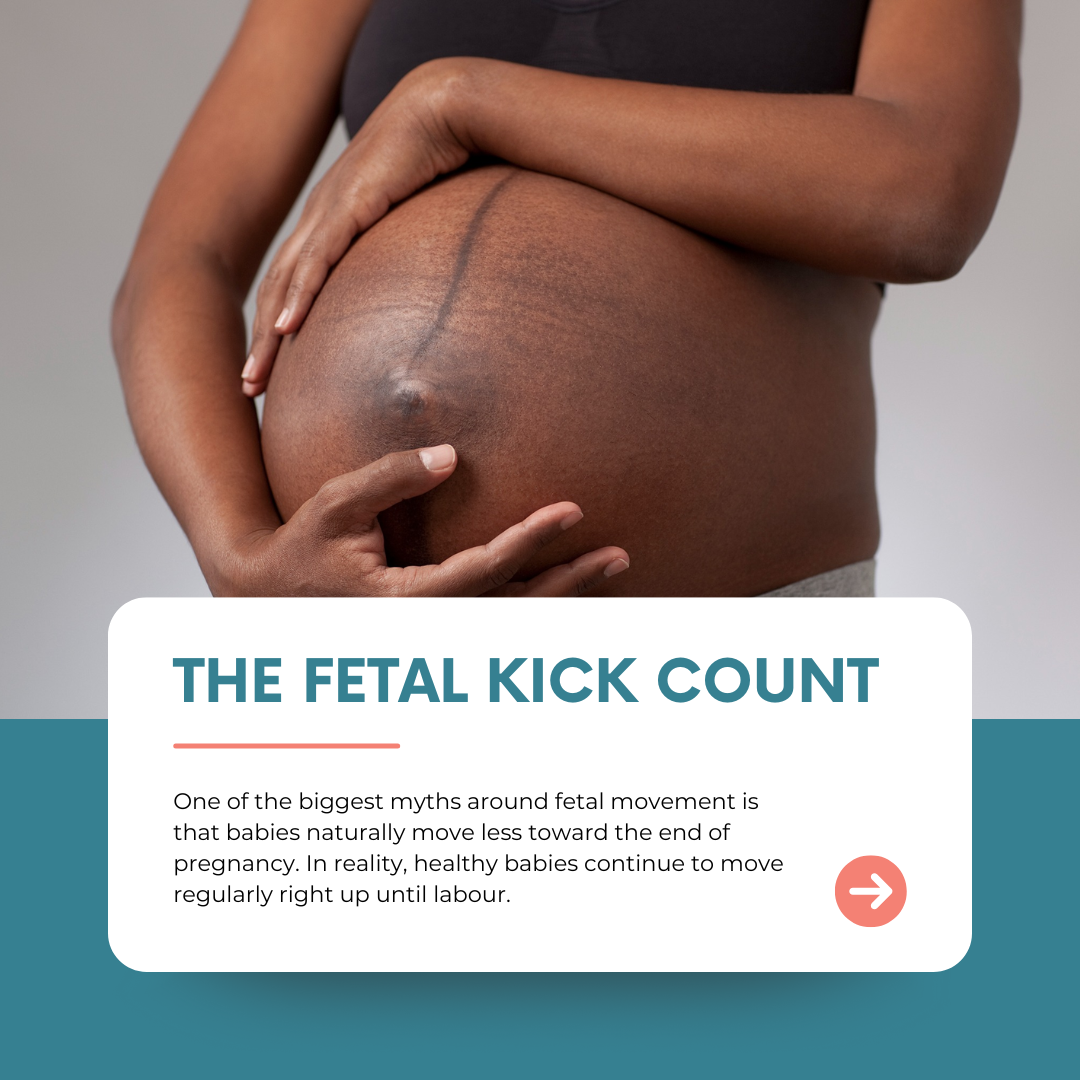
One of the biggest myths around fetal movement is that babies naturally move less toward the end of pregnancy. In reality, healthy babies continue to move regularly right up until labour. The movements may feel different as space becomes limited, but they should not disappear. A noticeable decrease in movement is never something to ignore or wait out.
If you find that it takes much longer than usual to feel your baby move, or you cannot feel ten movements within two hours during your baby’s active time, it’s time to act. Try having a light snack, drinking some water, and changing your position. If movement still feels reduced, trust your instincts and seek medical advice immediately. You are not overreacting, and you are not wasting anyone’s time. Healthcare providers would always rather check and reassure you than miss an early warning sign.
Certain red flags should prompt an urgent call or visit to your maternity care provider. These include a sudden stop in movements, a clear and persistent decrease from your baby’s usual pattern, or movements that feel significantly weaker than before. Even if everything turns out to be fine, making that call could be life-saving.
Beyond its medical importance, fetal kick counting can be a deeply emotional practice. It encourages you to slow down, tune in, and bond with your baby during the final months of pregnancy. Many mothers find it calming, grounding, and reassuring, especially during a time filled with questions and uncertainty.
In a world full of pregnancy apps, gadgets, and advice, fetal kick counting remains one of the most reliable tools available. It doesn’t require special equipment or medical training, just your attention and awareness. By making fetal kick counts part of your daily routine, you’re actively participating in your baby’s care and giving yourself the confidence to recognise when something doesn’t feel right.
Your instincts matter. Your observations matter. And those tiny kicks and rolls are your baby’s way of saying, “I’m here.” Listening closely could make all the difference.