



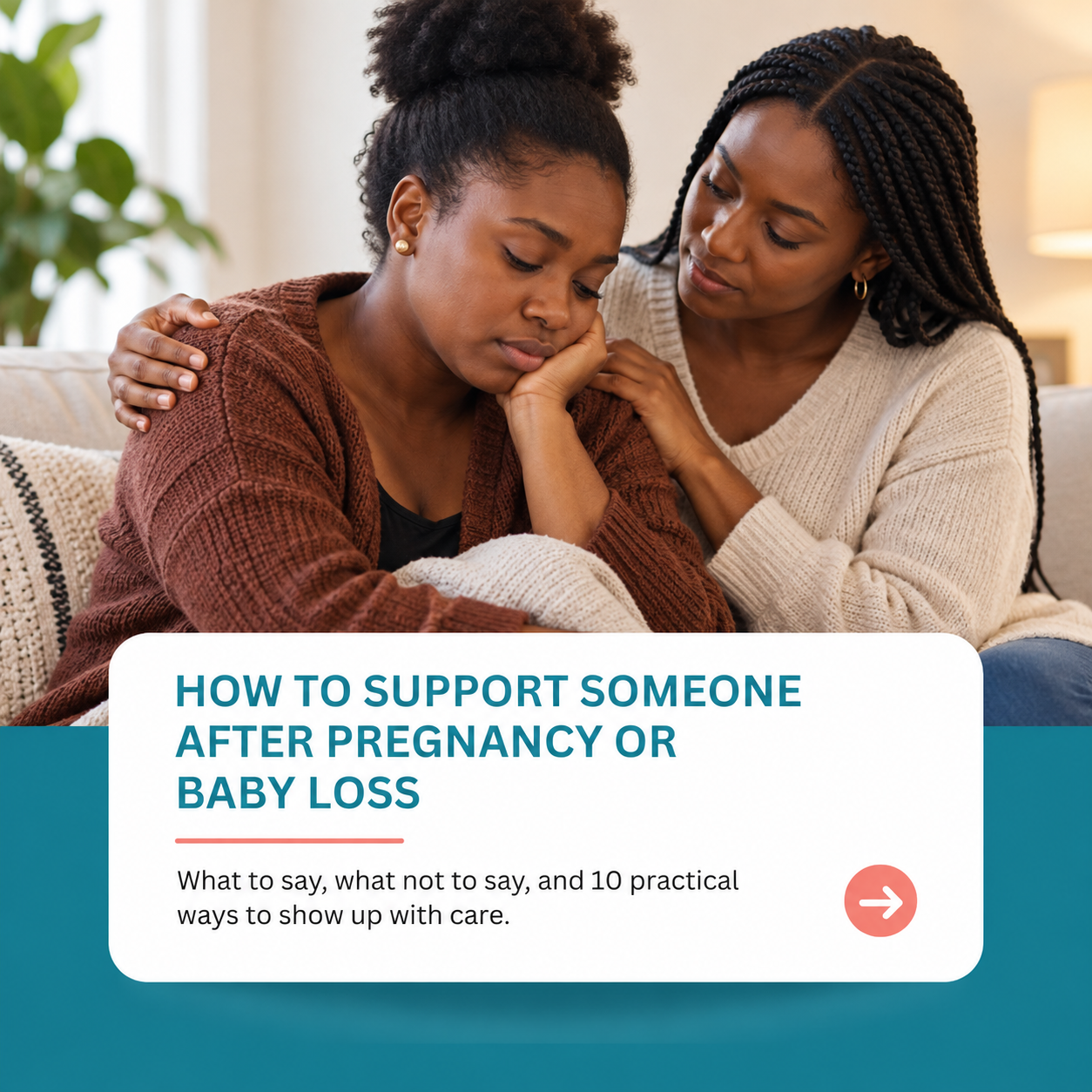
When someone close to you experiences a pregnancy or baby loss, finding the right words can feel impossible. You want to comfort them, but worry about saying something wrong or hurtful. Should you ask about the loss? Give them space? Offer advice?
The truth is, there’s no perfect response. Whether someone has experienced a miscarriage, stillbirth or the death of a newborn, small gestures of kindness,your presence, acknowledging their loss, listening without trying to fix their grief and continuing to show up can mean a great deal.
Here are ten ways to be there for someone during this difficult time.
1. Say something, even if you’re unsure what
It’s understandable to feel lost for words. But saying nothing out of fear of getting it wrong can leave someone feeling alone.
A simple “I’ve been thinking about you” is a good place to start.
You don’t need to have the answers. Acknowledging what happened lets your loved one know that their loss matters to you.
2. Resist the urge to make it better
We often reach for reassurance when someone is hurting. But phrases like “At least you can get pregnant”, “You can try again” or “Everything happens for a reason” may unintentionally dismiss their grief.
Rather than looking for a positive side, acknowledge the sadness of what has happened.
Try saying: “I’m so sorry you’re going through this.”
There’s no need to search for an explanation or a silver lining.
3. Listen, and let them lead
Some people want to talk about their experience. Others would rather spend time together without discussing it. Their wishes may change from one day to the next.
You can ask gently: “Would you like to talk about it, or would you prefer a distraction?”
If they open up, listen without interrupting, comparing experiences or offering advice they haven’t asked for.
And if they don’t feel like talking, that’s okay too.
4. Help with the little things
After pregnancy or baby loss, everyday tasks can feel overwhelming, particularly when someone is also recovering physically.
A home-cooked meal, help with childcare or an offer to run errands can take a small weight off their shoulders.
Instead of “Let me know if you need anything”, try something more specific: “I’m going shopping tomorrow. Can I pick up a few things for you?”
Make it easy for them to accept or decline. Sometimes the kindest gestures are the simplest.
5. Respect their privacy
Your loved one may not be ready for others to know what happened. Even close relatives or friends may not have been told.
Let them decide who knows, what is shared and when. This includes family conversations, WhatsApp groups and social media.
The same goes for visits and messages. If they need some space, respect it without withdrawing your support altogether.
A quiet “Thinking of you. No need to reply.” can say enough and ease the pressure
6. Make space for remembering
For some parents, hearing their baby’s name, sharing memories or talking about the future they had imagined brings comfort. Others may prefer not to speak about the loss especially in the early days
If they want to talk, listen without changing the subject, if they have named the baby, use the baby’s name appropriately. Acknowledging their baby communicates that the baby mattered
Follow their lead.
If they want to talk, be willing to listen, even when the conversation is difficult. Don’t change the subject simply because you’re uncomfortable. What matters is making room for their experience, however they choose to express it.
7. Be there beyond the first few weeks
Support often arrives immediately after a loss, then gradually fades as everyone returns to their routines. Yet grief can resurface long afterwards, sometimes unexpectedly.
Remembering a due date, an anniversary or simply checking in a few months later can be meaningful.
You might write: “I know it’s been a while, but I’ve been thinking of you. How are you doing?”
Don’t assume that because someone is smiling, working or socialising again, their grief has disappeared.
8. Be thoughtful around pregnancy and baby news
Pregnancy announcements, baby showers and family celebrations may bring mixed emotions after a loss.
If you’re sharing your own pregnancy news, consider telling your loved one privately before making a group announcement. A message gives them room to respond in their own time.
Continue inviting them to gatherings, but make it clear that declining is perfectly okay.
They can be happy for you and sad about their own experience at the same time.
9. Remember their partner, too
When a pregnancy ends in loss, attention often centres on the person who was pregnant. Their partner is grieving as well, sometimes quietly navigating their own emotions and trying to support their loved one
Checking in with them separately without assuming what they feel can make a difference. A simple “How have you been coping with the loss?” creates space for their feelings.
People don’t always express grief in the same way. Neither silence nor a brave face tells you everything about how someone is feeling.
10. Help them find support when they need it
Friends, family and community can offer important comfort.
Additional support from a counsellor, psychologist or healthcare professional can also provide a safe space to navigate difficult emotions, explore concerns or simply feel heard.
If your loved one is open to it, you can gently offer to help your loved one find professional support or accompany them to an appointment.
Remember, everyone experiences grief differently. Support should be available without pressure or expectations about how someone should feel or when they should feel better.
Sometimes, simply being there is enough
You can’t take away someone’s grief, but small gestures of kindness, patience and care can make a meaningful difference. In the first difficult days and long afterwards.
| At Malaica, we recognise that pregnancy loss affects both physical and emotional wellbeing. Our team offers individual and couples’ psychological counselling, providing a safe space to process grief, navigate difficult emotions and find support at your own pace. If you or someone close to you has experienced a loss, reach out to our team to explore how we can support you. |
You can also read our article Breaking Taboos: Talking About Miscarriage and Loss to learn more about opening up conversations around pregnancy loss.