



Pregnancy loss can affect both partners deeply – emotionally, physically and in their relationship with each other. The person who carried the pregnancy may also be coping with physical recovery. Feelings related to pregnancy loss can range from sadness, anger and guilt to anxiety, confusion or numbness. While one partner may want to talk about what happened, the other may seek distraction, quiet reflection or a return to familiar routines.
Everyone experiences loss differently, and feelings can be complex or even conflicting. There is no single right way to respond to pregnancy loss. Understanding each other’s experiences and finding ways to offer support can help you navigate this difficult time.
Understanding Each Other’s Grief
There is no single way to grieve, and no set timeline for healing.
Differences in how partners process grief can sometimes lead to misunderstandings. When you are grieving yourself, it may be particularly difficult to understand or respond to your partner’s needs.
For example, one partner may return to work quickly to regain a sense of routine, while the other may experience this as a sign that they are moving on too quickly. Or one partner may seek closeness and reassurance, while the other needs more time alone.
Grieving differently does not mean caring less. Rather than making assumptions about what your partner’s behaviour means, try to understand what they are experiencing and what they need. Both partners deserve space for their grief, even when their needs differ.
Actively Supporting Each Other
How can you communicate through grief?
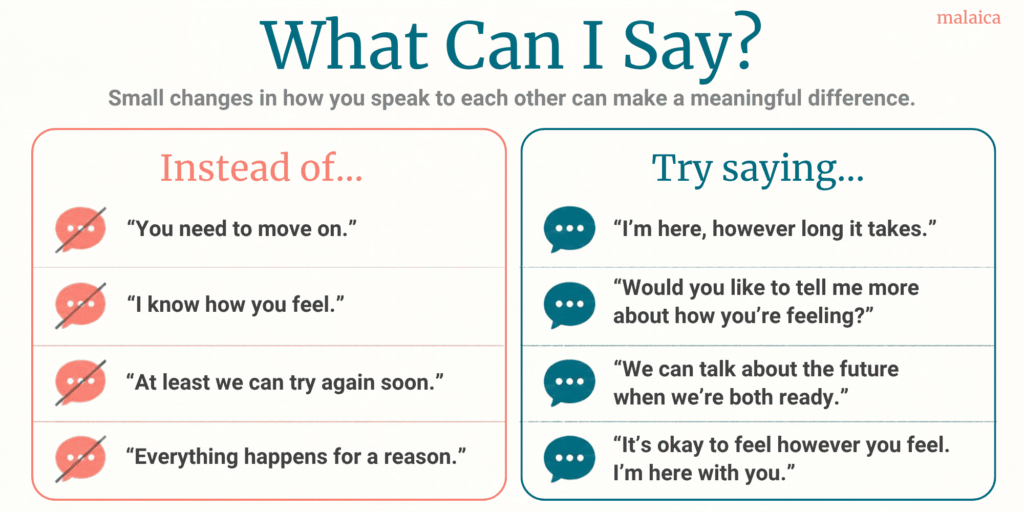
Try making space for brief, honest and gentle conversations, while respecting if one or both of you may not feel ready to open up.
- Ask rather than assume. “How are you feeling today?” or “Would you like to talk, or would you prefer some quiet time?”
- Listen without trying to fix things. Sometimes being heard is more helpful than receiving advice.
- Express your own needs. “I would really appreciate a hug” or “I need some time alone, but I still want us to be close.”
- Check in regularly. Feelings and needs can change from one day to another.
A simple daily check-in can help. Ask each other: “How are you feeling today?” and “What would help you most right now?“
You do not need to have all the answers. Try to make conversations open and invitational, rather than feeling obliged to talk. When emotions are difficult to put into words, avoid pressuring each other to talk. Sometimes sitting together in silence or offering a reassuring touch, if welcome, can be just as comforting.
Practical ways to support your partner
Small gestures can make a meaningful difference. Offer help with meals, household responsibilities or medical appointments. Make room for rest and physical recovery.
You might also find comfort in spending time together without discussing the loss: taking a walk, cooking a meal or simply enjoying each other’s company.
Importantly, supporting your partner does not mean putting your own grief aside. Both of you deserve care and understanding.
Navigating intimacy and future pregnancies
Pregnancy loss can affect physical and emotional intimacy. One partner may seek closeness, while the other needs time, reassurance or space. One may feel differently about sex and trying to conceive again.
Respect each other’s boundaries and avoid pressure. Physical affection does not always need to lead to sex, and closeness can take many forms. Either partner should be able to express boundaries without being interpreted as rejection-
Discuss your hopes and concerns about conceiving again openly, without rushing a decision. Physical recovery, emotional readiness and medical readiness for another pregnancy are different considerations. Your healthcare professional can advise when resuming sex or trying again is medically appropriate.
Facing family and social expectations
Family, friends and community can provide valuable support, but sometimes well-intentioned comments can hurt. Phrases like “At least it happened early” or “You can always try again” may unintentionally minimise your loss.
Decide together whom you want to tell, what you feel comfortable sharing and whether you would like someone else to communicate the news.
It is okay to set boundaries. A simple “We’re not ready to talk about this yet.” is enough.
You can also read our article Breaking Taboos: Talking About Miscarriage and Loss.
Finding ways to remember and heal together
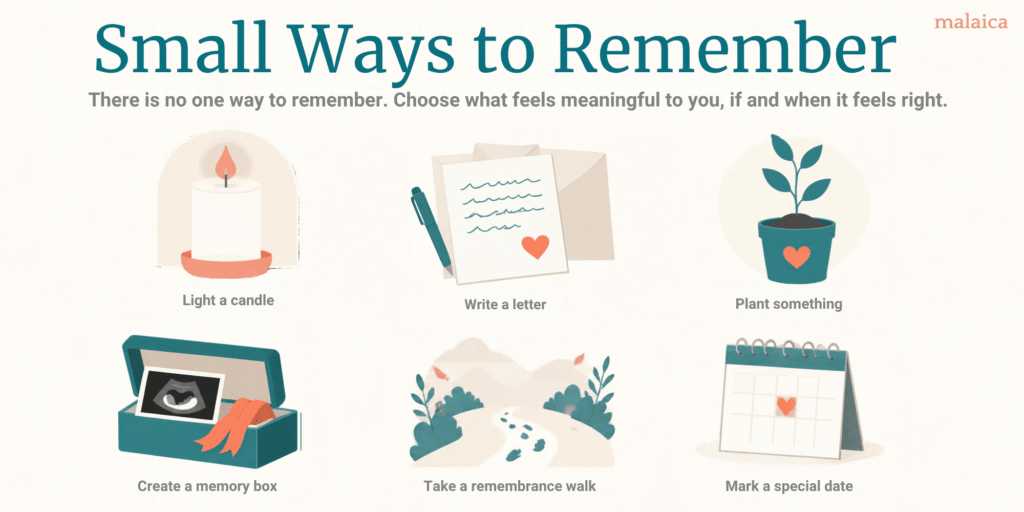
There is no right or wrong way to remember a pregnancy loss. Some couples find comfort in remembering their pregnancy or baby through a personal ritual.
You might want to:
- Light a candle or say a prayer together.
- Plant a tree or flower in remembrance.
- Write a letter or create a memory box with meaningful keepsakes.
- Choose a meaningful name or symbol.
- Mark a significant date, such as the expected due date.
- Make a donation or do something kind in your baby’s memory.
Others prefer to remember privately or do not wish to create a ritual. If the partners have different preferences, they can look into ways of honouring each other’s needs without pressuring either to participate.
Healing does not have to mean forgetting. You can find ways to remember while making room for new experiences.
When Should You Seek Additional Support?
Grief is a natural response to pregnancy loss, but you do not have to navigate it alone.
You do not have to wait until distress becomes overwhelming to seek help. Speaking with a qualified mental health professional can be helpful at any stage, whether you are experiencing persistent sadness or anxiety, finding everyday life or communication difficult, or simply need a safe space to talk. You can seek support individually or as a couple.
| At Malaica, we recognise that pregnancy loss affects both physical and emotional wellbeing. Our team of maternal mental health professionals offers confidential virtual and in-person support including individual and couples’ psychological counselling.We offer a safe space to process your emotions, navigate the loss together and explore your experiences at your own pace.If you or someone close to you has experienced a pregnancy loss, reach out to our team to learn more about how we can support you. |
You do not have to grieve in the same way to grieve together. Give yourselves time, be gentle with each other and seek support whenever you need it.
Sources and further reading
Schuette et al. (2025). Psychological Support for Patients After Pregnancy Loss.
Liu & Shorey (2021). Psychosocial Interventions on Psychological Outcomes of Parents with Perinatal Loss.
Cuenca (2023). Pregnancy Loss: Consequences for Mental Health.