


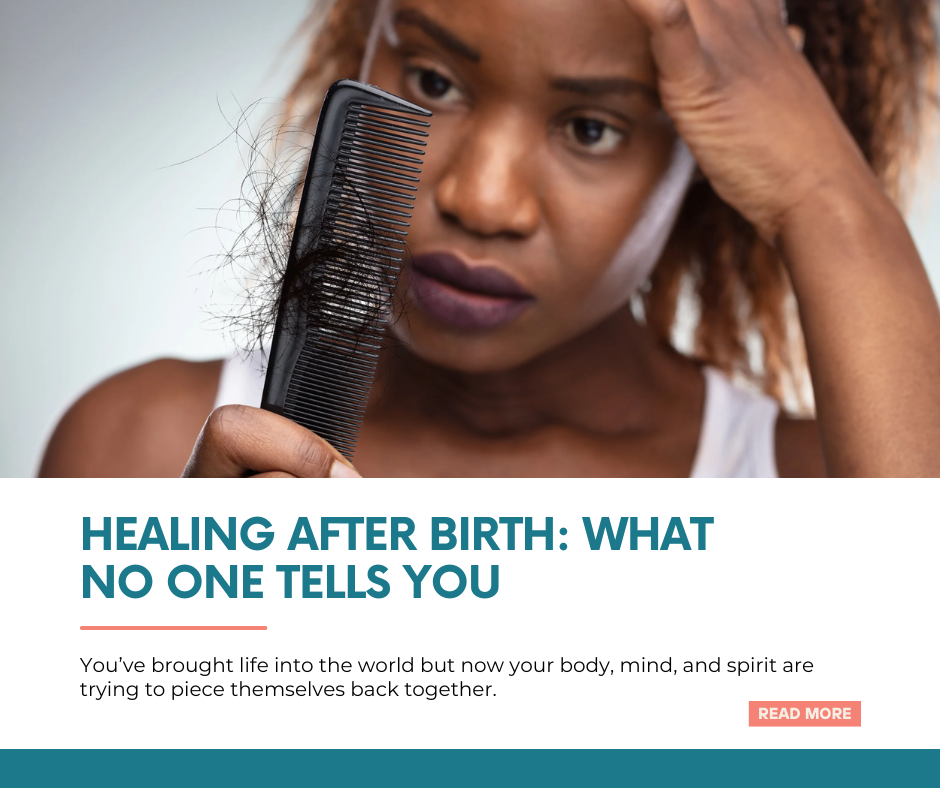
“Doc, you didn’t tell me I’ll be losing my hair, especially the forehead. Aaai doc, what happened?”
That’s the cry of many new mothers as they stare at the hairbrush filled with strands that once crowned their heads. It can be shocking to watch your hairline retreat or your once-thick mane become noticeably thinner. But here’s the truth: postpartum hair loss and body changes are common, temporary, and completely normal.
Motherhood brings incredible joy, but it also comes with a series of physical changes no one tells you about and can catch even the most prepared mom off guard. Beyond the hair loss, your body also goes through:
- Mental transitions
- Stretch marks
- Softer tummy muscles
- Swelling
- Pigmentation
- Shifts in weight distribution
Let’s unpack these postpartum changes and, more importantly, how to cope with them gracefully.
What Causes Postpartum Hair Loss and Body Changes?
During pregnancy, high levels of estrogen prolong the growth phase of hair, meaning fewer strands grow out. Your hair appears thicker, shinier, and fuller—basically, the best it’s ever been. But after childbirth, those hormone levels drop sharply, triggering a shedding phase. What was meant to fall out gradually over nine months now happens all at once, usually between three to six months postpartum.
In a postpartum research study done on 331 women, 90% of them experienced hair loss after childbirth, which explains how common the condition is. You might notice clumps of hair falling out in the shower, around the hairline (especially the forehead), or an overall thinning. It can be unsettling, but rest assured it’s a phase. By your baby’s first birthday, your hair should return to its normal growth pattern.
How to Manage Postpartum Hair Loss
While you can’t completely stop postpartum shedding, there are simple ways to manage it and encourage healthy regrowth.
1. Be Gentle With Your Hair
Avoid tight hairstyles like ponytails or braids that pull on the scalp. Instead, go for looser styles and use a wide-tooth comb to minimize breakage. Switch to a volumizing shampoo and lightweight conditioner that make your hair appear fuller and avoid heavy products that weigh it down.
2. Eat a Nutrient-Rich Diet
Iron, zinc, vitamin D, and biotin are all essential for healthy hair growth. Foods like eggs, spinach, lentils, salmon, and avocados can help nourish your hair from within.
Consider supplements but consult your doctor first. Sometimes, postpartum anemia or thyroid issues can worsen shedding, so it’s best to rule out underlying causes before self-medicating.
3. Trim Your Hair
A shorter, layered cut can make thinning less noticeable and easier to manage while boosting your confidence. Remember: this is temporary and the hair loss you’re experiencing is part of your body’s natural reset process.
Other Postpartum Body Changes and How to Cope With Them
Hair isn’t the only thing that changes after childbirth. Your body has gone through a marathon emotionally, physically, and hormone-wise. Let’s walk through other common changes to expect and how to embrace them with grace.
Postpartum Belly
That soft belly you see in the mirror? It sheltered your baby for nine months. The uterus takes about six weeks to shrink back, and abdominal muscles may need time to realign—especially if you experienced diastasis recti, which is a separation of the abdominal muscles.
How to cope with pregnancy belly after childbirth:
- Be patient with your recovery: Gentle postpartum exercises, core strengthening, and walking can help gradually tone your abdomen.
- Hydrate and moisturize your skin: Natural oils like shea butter or vitamin E can improve skin elasticity over time.
- Celebrate your stretchmarks as proof of life and strength, not imperfections.
Breast Changes
Your breasts may look and feel differently larger, softer, or less perky. For breastfeeding mothers, engorgement or sagging can occur once milk production adjusts or ends.
How to cope with breast changes after birth:
- Invest in a supportive nursing bra.
- Apply cold compresses for swelling or discomfort.
- Maintain good posture to reduce strain on your back and shoulders.
Skin Changes and Pigmentation
Many mothers experience melasma (dark patches on the face) or a dark line on the belly (linea nigra). These changes often fade with time as postpartum hormones balance out.
How to cope with skin changes after childbirth:
- Use sunscreen daily to prevent dark spots from worsening.
- Gentle exfoliation and vitamin C serums can help even out your skin tone.
- Focus on hydration and rest and remember, your skin reflects your internal wellness.
Weight Fluctuations
The pressure to “bounce back” after pregnancy is real, but unrealistic. Weight loss after birth varies for everyone depending on genetics, breastfeeding, metabolism, and lifestyle.
How to cope with weight changes after birth:
- Shift your mindset from “losing weight” to “gaining strength.”
- Focus on balanced meals, plenty of water, and rest.
- Start with gentle and simple exercises, such as walks, to avoid straining your body
Postpartum Recovery Is Not a Race, Move at Your Own Pace
Your postpartum journey is not about reclaiming your old body, it’s about embracing your new one. The one that grew life, endured sleepless nights, and continues to nurture. It’s easy to look in the mirror and mourn what’s changed. But take a moment to appreciate what’s been gained: resilience, deeper empathy, and a renewed sense of purpose.
So when you catch yourself staring at that hairbrush again, remind yourself, this too shall pass. Your body is still healing after birth, still transforming, still magnificent. Grace, mama, is not found in perfection but in acceptance. You are still you, just stronger, wiser, and even more beautiful.
And when you need expert postpartum care for any of the above body changes, Malaica Maternity Hospital is here for you! You’ll get expert routine medical attention with multiple layers of support including 24/7 emergency line, a virtual psychologist, and an online community of newborn mums just like you.
Learn how we can empower and support your postnatal recovery by calling or sending us a message at +254 746 610643.