


Staying active through pregnancy: a mum's guide to safe movement
by Dr. Stella Danek, PhD Public Health
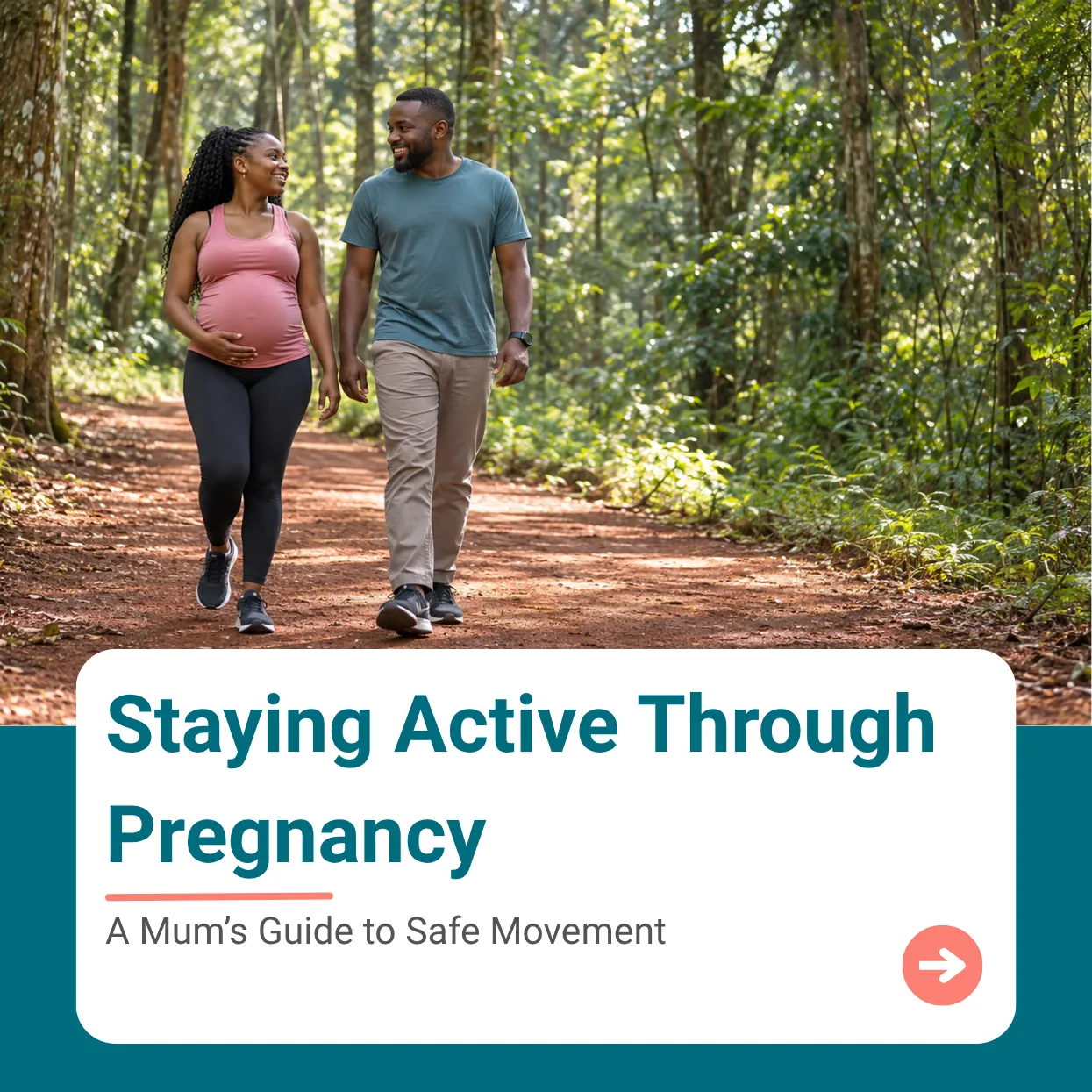
Moving through motherhood, together—staying active in pregnancy with support from your partner.
26 November 2026
Reviewed by Dr. Pauline Adede, Doctor of Medicine
Last updated: 26 November 2026
Staying active is safe and good for you and your baby. This guide explains how much to move, which activities suit pregnancy, what to pause for now and when to stop and get checked.
Key takeaways
- Aim for at least 150 minutes of moderate activity a week, where you can still talk but couldn't sing.
- Walking, dancing, light strength exercises, prenatal yoga and swimming are all good choices.
- Pause contact sports, activities where you could fall, scuba diving and exercise in great heat.
- Stop and seek medical help if you notice bleeding, leaking fluid, dizziness, chest pain, painful contractions or any other danger signs.
Is it safe to exercise while pregnant?
Yes. Kenya's Ministry of Health recommends regular physical activity for pregnant women who have no medical reason to avoid it. For healthy pregnancies, exercise does not increase the risk of miscarriage, low birth weight or early delivery (ACOG, 2025).
Relatives may tell you to rest as much as possible. Rest matters when you're tired, but long periods of inactivity carry their own risks, such as blood clots. Staying active is linked to a lower chance of gestational diabetes and high blood pressure, and a higher chance of a vaginal birth
Benefits of exercise in pregnancy
Some benefits of staying active are ones you may notice day to day, like a less achy back or a better night’s sleep. Others, like a lower chance of developing gestational diabetes, may be less obvious.
Research suggests that staying active in pregnancy can:
- Ease common discomforts like back pain or constipation. If your lower back aches or you’re struggling with constipation, regular movement may help you feel more comfortable. (ACOG, 2025; Liddle and Pennick, 2015)
- Support your mood, sleep and energy. In studies of exercise programmes that included strength training, some women reported feeling less tired, sleeping better or noticing a lift in their mood. (Redondo-Delgado et al., 2025)
- Build stamina as your body changes. Activities like brisk walking give your heart a workout and help you maintain your fitness. Staying active can also support healthy weight gain during pregnancy and gradual weight loss after birth, if that is a goal for you. (ACOG, 2025)
- Lower the chance of some pregnancy complications. Women who exercise regularly during pregnancy are less likely to develop gestational diabetes or high blood pressure in pregnancy, including pre-eclampsia. (Davenport et al., 2018)
- Exercise may also make a difference during labour. Studies suggest that women who stay active may have a shorter labour experience. (Andargie et al., 2025; Watkins et al., 2021)
Note: these are average results from studies: movement lowers some risks but can't guarantee a particular outcome. Many different factors shape how your own pregnancy and birth unfold.
How much movement do you need?
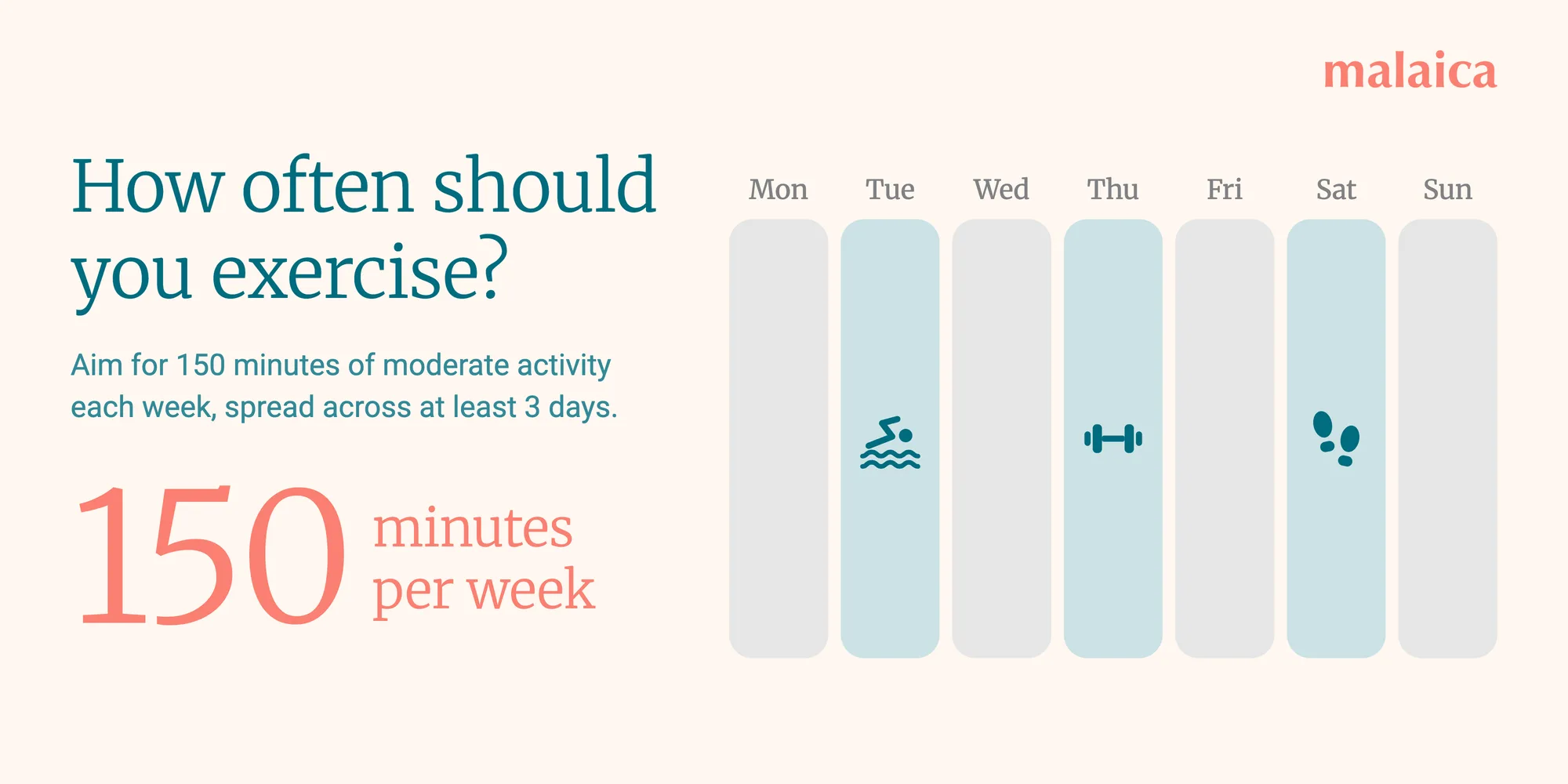
Aim for at least 150 minutes a week, spread over at least three days. That could be 30 minutes on five days, or short 10-minute bursts through the day.
Use the talk test: you should be able to hold a conversation, but not sing.
- New to exercise? Start with 5 minutes a day and add 5 minutes each week.
- Already active? You can usually carry on with what you did before, adapting as your bump grows.
Any movement is better than sitting, so get up regularly on long commutes or at a desk.
Good activities for (expectant) mums
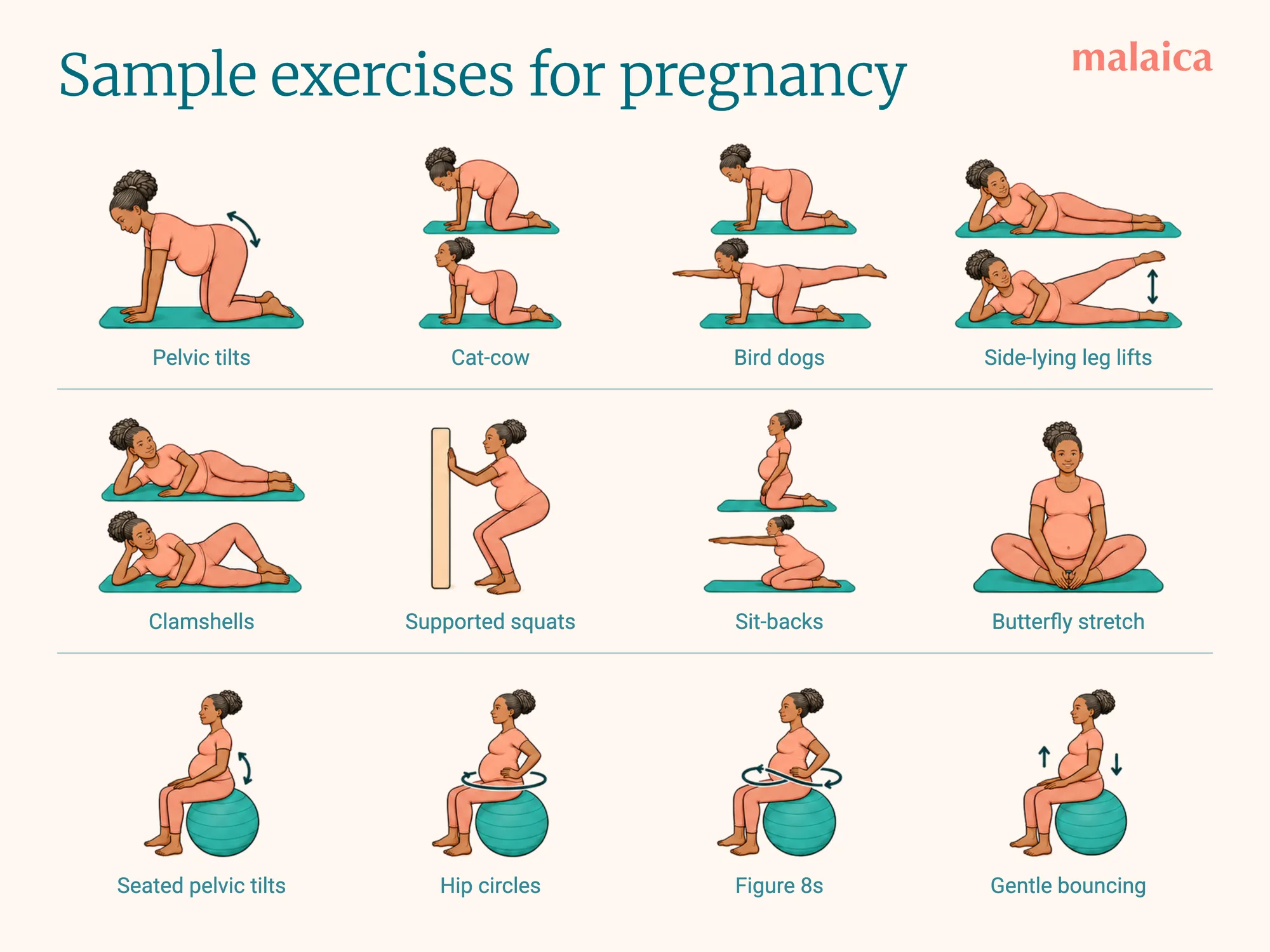
You don’t need a gym to stay active. Walking, dancing and simple exercises at home can all fit into your routine. Choose something you enjoy and adapt it to how you feel that day.
- Walking: to the shops, the stage or church, around your estate, or at weekends in Karura Forest, the Arboretum or a park near you.
- Dancing: dance fitness classes or dancing at home. Keep the moves low-impact and skip the jumps.
- Strength exercises: chair squats, wall push-ups, exercises with resistance bands or even just filled water bottles as weights. Breathe out as you lift and don't hold your breath.
- Prenatal yoga and stretching: builds flexibility and calm breathing. Choose poses adapted for pregnancy.
- Swimming: the water supports your weight, and walking in the shallow end counts too.
- Light gardening work: raking and weeding count. Remember not to bend, but rather to squat. Take breaks and avoid the midday sun.
- Cycling and jogging: if you did these confidently before pregnancy, you can usually continue. A stationary bike avoids the risk of falling, and busy roads are best avoided.
FAQs on lifting weights and strength training in pregnancy
1. I lifted weights before pregnancy. Can I continue? Yes, if your pregnancy is uncomplicated, you can usually continue with familiar lifts. Keep the effort moderate and adapt the movement as your bump grows. Avoid activities that add load to the pelvic floor.
2. How much weight can I lift? Choose a weight you can lift smoothly for several repetitions while breathing steadily. If you need to strain or hold your breath, choose a lighter weight. You can also use the “talk test” mentioned above.
3. Is resistance training safe in every trimester? For most women with an uncomplicated pregnancy, yes. Resistance bands, light weights and exercises that use your own body weight are all good options. If you’re new to strength training, start gently.
If in doubt, always ask your doctor or midwife which exercises are suitable for you.
Your pelvic floor: support for pregnancy and beyond
Alongside other activities, pelvic floor exercises deserve a place in your daily routine. These muscles support your bladder, bowel and womb, help control urine and wind, and contribute to sexual function. Keeping them working well matters throughout life, not only when you’re pregnant, and can help prevent or reduce urine leakage.
During pregnancy, your growing baby puts extra pressure on your pelvic floor muscles. Regular pelvic floor training can reduce the risk of leaking urine during pregnancy and after birth. It also teaches you how to both contract and relax these muscles, giving you better pushing control. (Woodley et al., 2020).
How do you train your pelvic floor muscles?
A pelvic floor relaxation and activation exercise:
- Get comfortable: Sit upright, feet flat. Relax your shoulders, buttocks and thighs.
- Breathe in. As you breathe in, let your belly soften and your pelvic floor relax. You may want to lay a hand on your belly to feel it filling with air.
- Breathe out. As you breathe out, gently squeeze the area between your hip bones, between your back passage and vagina, then lift inward and upward. Gently squeeze and lift as if stopping wind and urine.
- Hold for a few seconds.
- Breathe in again. Slowly release the lift and relax completely. Do not push down.
Try 3–5 gentle repetitions, taking an extra relaxed breath between each if needed.
Learning to relax these muscles is just as important as strengthening them.
Avoid practising while actually passing urine.
If you experience any pain, leakage or a feeling of heaviness, ask your doctor, midwife or a pelvic health physiotherapist for guidance.
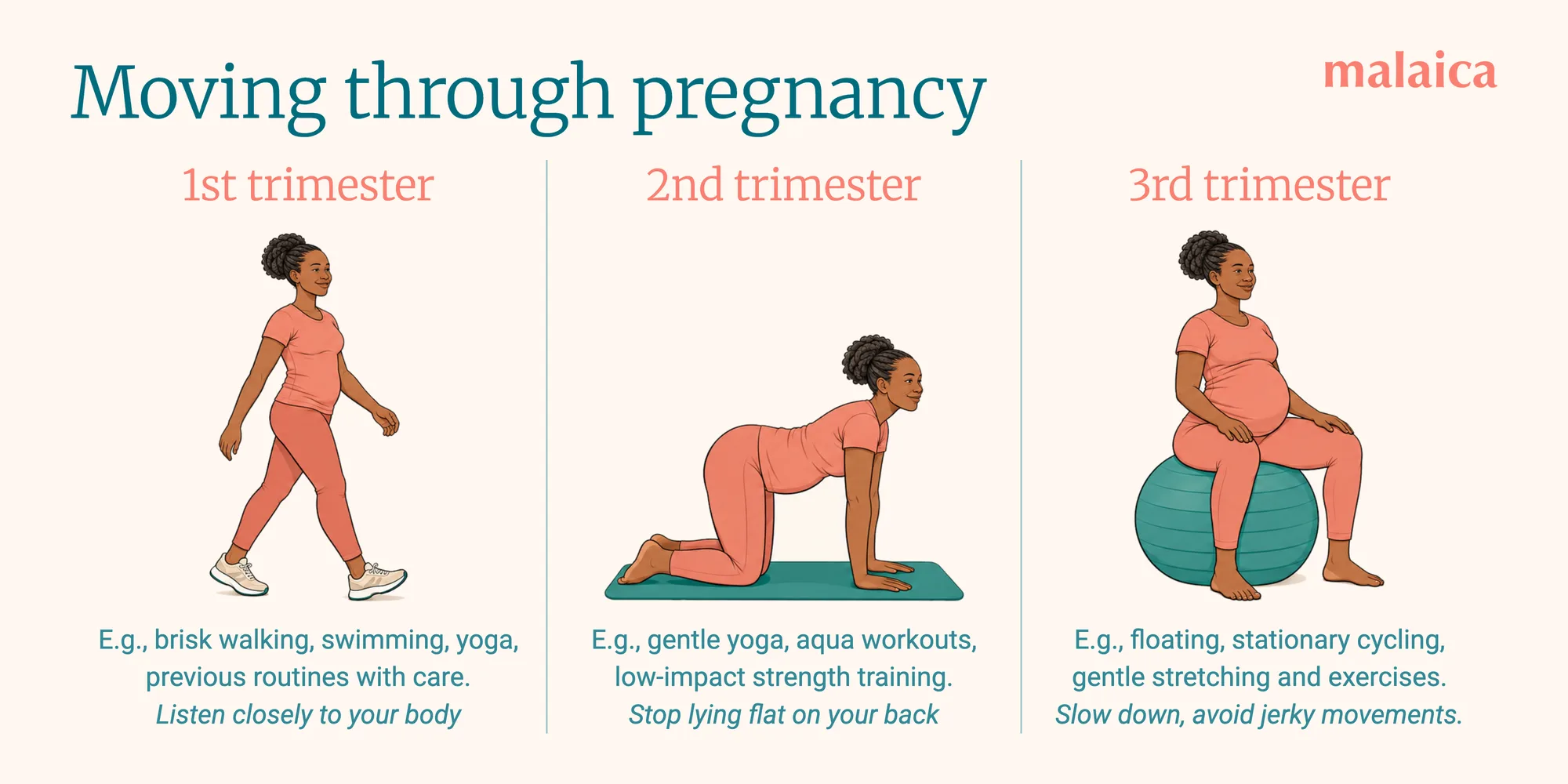
Moving through each trimester
Your body changes a lot over nine months, so let your movement change with it. Some days you'll feel strong; on others, rest is the right choice.
- First trimester (weeks 1 to 12): tiredness and nausea are common, and a short walk in fresh air often helps. Take extra care not to overheat.
- Second trimester (weeks 13 to 27): many mums find their energy returns. Swap sit-ups for exercises on your side or on all fours.
- Third trimester (weeks 28 to birth): your bump shifts your balance and hormones loosen your joints, so falls and strains become more likely. Slow down, choose stable surfaces and avoid jerky, bouncy movements.
Moving comfortably in everyday life
Movement isn’t limited to exercise. Chores, work and getting from place to place can also make your day physically demanding. The aim isn’t always to do more: it can also be to take breaks, share heavier tasks and adjust how you move as your pregnancy progresses.
- Chores: sweeping, cooking and washing clothes keep you moving. Sit on a low stool rather than bending for long.
- Carrying water and heavy loads: a full 20-litre jerrican weighs about 20 kg. Frequent heavy lifting has been linked with early birth, so carry half-full containers, use a cart and share the load.
- Standing for long periods, for example at a market stall or salon: shift your weight and walk around often to avoid feeling faint.
- Travel: sit rather than stand on a matatu, and choose another option to a boda boda when you can.
Sports and activities to pause for now
As your bump grows, your balance changes and falls become more likely. Pause anything where you could be hit, fall or overheat.
- Contact sports: football, netball, basketball, rugby, volleyball, boxing and martial arts.
- Activities where you could fall: horse riding, cycling on busy roads or rough trails, skating and gymnastics.
- Scuba diving.
- Great heat: avoid hot yoga, and in hot places exercise early or late in the day. Drink water before, during and after.
- High altitude: if you live at the coast or by the lake, ask your doctor before strenuous activity above about 1,800 metres, such as a Mount Kenya trek.
- Lying flat on your back for long after the first trimester: it can make you dizzy. Use your side or all fours instead.
Why avoid lying flat on your back later in pregnancy?
Lying on your back is generally fine in the first trimester. From around 20 weeks, staying flat for a long time can lead your growing womb to press on the vena cava, a large vein that carries blood back to your heart. This can lower your blood pressure, make you feel dizzy or faint, and reduce blood flow to the placenta.
During exercise, switch to a side-lying position if a movement involves staying flat on your back. If you feel dizzy, stop and roll onto your side.
For sleep, from 28 weeks, settle on either side. A pillow between your knees or under your bump may help you get comfortable. If you wake on your back, simply turn onto your side again.
When to stop and get help
Stop exercising and contact your midwife or doctor if you notice (Kenya MoH Mother and Child Health Handbook, 2022):
- Vaginal bleeding
- Severe headache or blurred vision
- Severe abdominal pain
- Reduced or absent baby movements
- Leaking amniotic fluid
- Difficulty breathing or chest pain
- High fever or chills
- Sudden swelling of the face or hands
Some conditions need a tailored plan, such as heart or lung conditions, diabetes or high blood pressure that is not well controlled, ongoing bleeding, a low-lying placenta, a weak cervix, early labour or carrying twins. Your midwife or doctor will advise you on what's safe.
Keep moving, joyfully
Movement in pregnancy isn't about pushing yourself. Start where you are, choose activities you enjoy and bring someone along.
Join our weekly prenatal yoga class at the Malaica Community Studio and move with other mums at the same stage as you.
Move with us at the Malaica Community Studio Join our weekly prenatal yoga class, or one of our special sessions such as the Community Movement Day or a Mums’ Walk. It's a lovely way to stay active and meet other mums, some may even be due around the same time as you. See our full class schedule and book a place on our website: https://malaica.com/events/ |
This article provides general information and does not replace personalised advice from a qualified healthcare professional.
Sources
- Ministry of Health, Kenya. Guideline on physical activity in Kenya. 1st edition. 2025 (launched June 2026). https://health.go.ke/sites/default/files/2026-06/Guideline%20on%20physical%20activity%20in%20Kenya.pdf
- American College of Obstetricians and Gynecologists. Exercise during pregnancy (patient FAQ 119). Last updated November 2025. https://www.acog.org/womens-health/faqs/exercise-during-pregnancy (accessed 24 October 2026).
- American College of Obstetricians and Gynecologists. Physical activity and exercise during pregnancy and the postpartum period. Committee Opinion No. 804. Obstetrics & Gynecology. 2020;135(4):e178–e188. https://www.acog.org/clinical/clinical-guidance/committee-opinion/articles/2020/04/physical-activity-and-exercise-during-pregnancy-and-the-postpartum-period
- Liddle SD, Pennick V. Interventions for preventing and treating low-back and pelvic pain during pregnancy. Cochrane Database of Systematic Reviews. 2015;(9):CD001139. https://doi.org/10.1002/14651858.CD001139.pub4
- Redondo-Delgado P, Blanco-Giménez P, López-Ortiz S, et al. Effects of strength training on quality of life in pregnant women: a systematic review. Acta Obstetricia et Gynecologica Scandinavica. 2025;104:1231–1243. https://doi.org/10.1111/aogs.15122
- Davenport MH, Ruchat SM, Poitras VJ, et al. Prenatal exercise for the prevention of gestational diabetes mellitus and hypertensive disorders of pregnancy: a systematic review and meta-analysis. British Journal of Sports Medicine. 2018;52:1367–1375. https://doi.org/10.1136/bjsports-2018-099355
- Andargie BA, Legas A, W/Sellassie A, Abuhay H, Angaw DA. Effects of physical exercise during pregnancy on delivery outcomes: systematic review and meta-analysis of randomized controlled trials. PLOS One. 2025;20(7):e0326868. https://doi.org/10.1371/journal.pone.0326868
- Watkins VY, O'Donnell CM, Perez M, et al. The impact of physical activity during pregnancy on labor and delivery. American Journal of Obstetrics and Gynecology. 2021;225(4):437.e1–437.e8. https://doi.org/10.1016/j.ajog.2021.05.036
- Royal Australian and New Zealand College of Obstetricians and Gynaecologists (RANZCOG). Exercise during pregnancy (patient information pamphlet). Updated August 2024. https://ranzcog.edu.au/womens-health/patient-information-guides/patient-information-pamphlets (accessed 26 November 2026).
- NHS. Tiredness and sleep problems in pregnancy. Page last reviewed 11 March 2024. https://www.nhs.uk/pregnancy/related-conditions/common-symptoms/tiredness/ (accessed 26 November 2026).
- Woodley SJ, Lawrenson P, Boyle R, et al. Pelvic floor muscle training for preventing and treating urinary and faecal incontinence in antenatal and postnatal women. Cochrane Database of Systematic Reviews. 2020;(5):CD007471. https://doi.org/10.1002/14651858.CD007471.pub4