


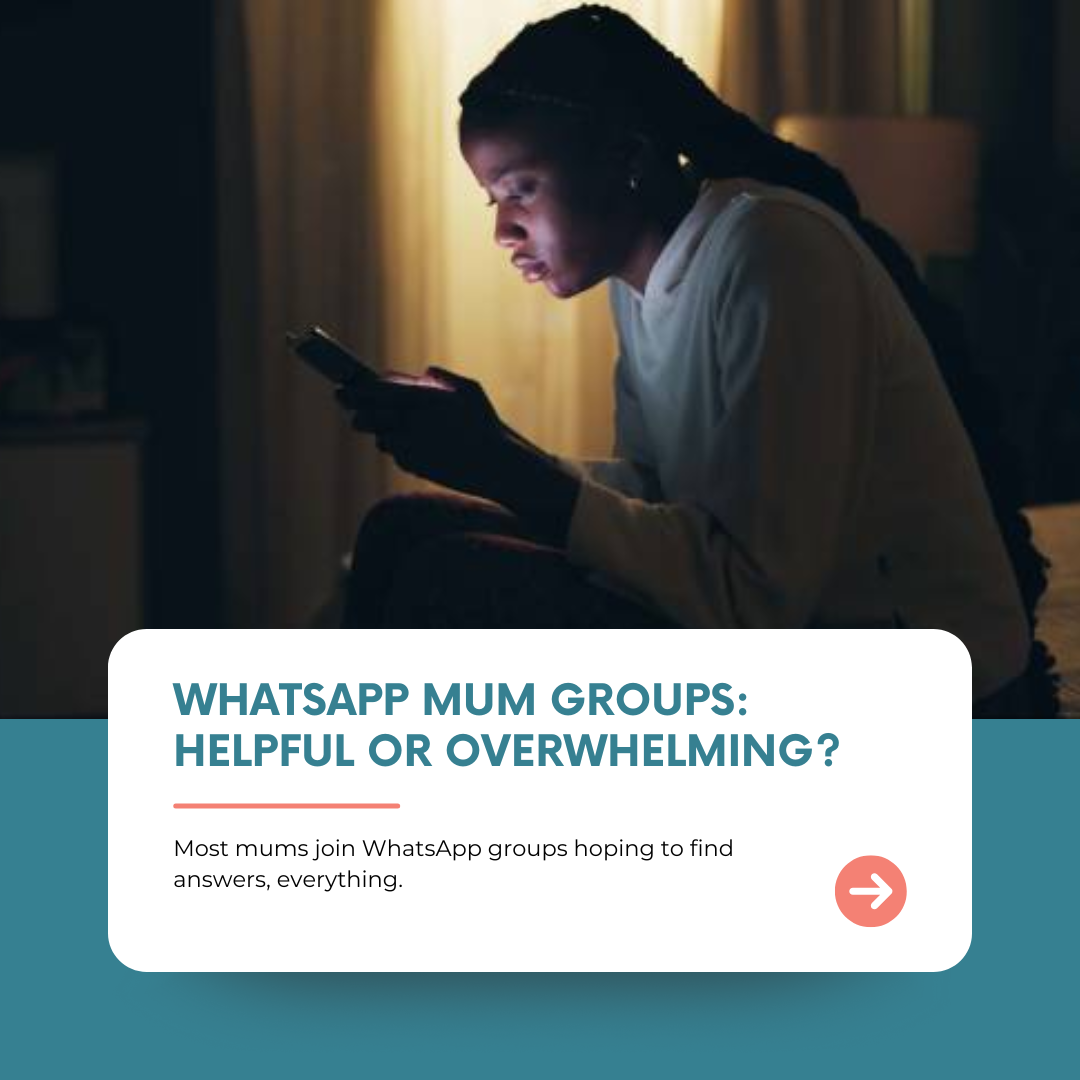
WhatsApp mum groups have become the new digital village, a place where mothers from all walks of life gather to share advice, celebrate milestones, and sometimes even vent about the chaos that comes with raising children.
For many mums, these groups offer a sense of community that can be hard to find offline, especially when juggling work, family, and the endless responsibilities that come with being a parent. But as helpful as they can be, they can also quickly become overwhelming, leaving many mums wondering whether they’re gaining support or accidentally adding more stress to their already full plates.
Reasons for Joining WhatsApp Mum Groups
Most mums join WhatsApp groups hoping to find answers, everything from where to buy affordable diapers in Nairobi, to the safest maternity hospitals, the best baby formula, or tried-and-tested remedies for colic.
And truly, these groups can be helpful. There’s comfort in knowing that at 3 a.m., someone else is awake, breastfeeding, and ready to respond with a “Try this, it worked for me.” There’s reassurance in hearing real experiences from fellow mums who understand the local context, prices, hospitals, schools, weather, family dynamics, and everything in between.
For first-time mums especially, these groups feel like a lifeline guiding them through unfamiliar territory of pregnancy and motherhood.
The Challenges of Joining WhatsApp Mum Groups
But then comes the other side.
- The voice notes that are five minutes too long. The 200 unread messages in 20 minutes.
- The unsolicited medical advice that sounds more like a Google search than something a pediatrician would approve.
- The constant pressure to keep up, respond, or contribute, even on days when you barely have time to breathe.
Many mums admit that while the groups started as supportive circles, they slowly turned into noise-filled spaces that leave them anxious or second-guessing their parenting choices.
In Kenya, where motherhood already comes with high expectations from family and community, WhatsApp mum groups can amplify that pressure. One mum shares a recipe for weaning at four months, another swears babies should only start solids at six months, and suddenly you’re caught in between, wondering whether you’re doing it “right.”
The comparison creeps in quietly. Whose baby is crawling earlier, whose child is reading at three, who got the perfect nanny, and before you know it, what should have been a safe space becomes a silent competition you didn’t sign up for.
The Benefits of Joining WhatsApp and Online Mum Groups
Despite these challenges, it’s still impossible to deny the beauty that these groups bring. They have:
- Raised funds for mums in need
- Stepped in during emergencies
- Shared job opportunities
- Created friendships that go beyond the screen.
Some mums have found their strongest support systems from people they’ve never met physically. There’s a special kind of magic in being understood by someone who knows the struggles of finding a good house-help, dealing with changing SHA rules, or budgeting for school fees.
Finding the Balance
The key is knowing how to balance engagement without losing your peace. Muting the group doesn’t mean you’re less involved; it simply means you’re protecting your mental space. Checking in once or twice a day is enough for most people. And it’s perfectly okay to leave a group that no longer serves you, motherhood is hard enough without unnecessary digital pressure.
WhatsApp mum groups in Kenya are both helpful and overwhelming, depending on how you navigate them. They can be the warmest circles of support or the loudest sources of confusion. At the end of the day, every mum has to choose what works for her, her child, and her sanity.
And whether you’re active in all your groups or quietly observing from the back, the truth remains: motherhood doesn’t come with a manual, but it does come with a community, sometimes one notification at a time.
Malaica’s Online Community Support
Whether you’re pregnant, newly postpartum, or adjusting to life with your newborn, Malaica’s online group of mums is be a safe non-judgmental space for you. We match you with a group of women who are as far along as you are to share concerns, grow together, and receive encouragement.
Besides hearing from oms, we also offer trusted expert advice from our moderators, including a nutritionist, psychologist, gynecologist, and a midwife. Call or send us a message at +254 746 610643 to learn more about our WhatsApp mum groups and how this type of peer support can empower your pregnancy and motherhood journey. You can also fill out our online booking form and we’ll call you back.