


For many Kenyan couples, the journey to parenthood doesn’t always follow the expected timeline. Sometimes the road bends, pauses, or takes a detour. And in those moments, in-vitro fertilisation (IVF) has become one of the most hopeful path, one that more families in Kenya are starting to explore with courage and curiosity.
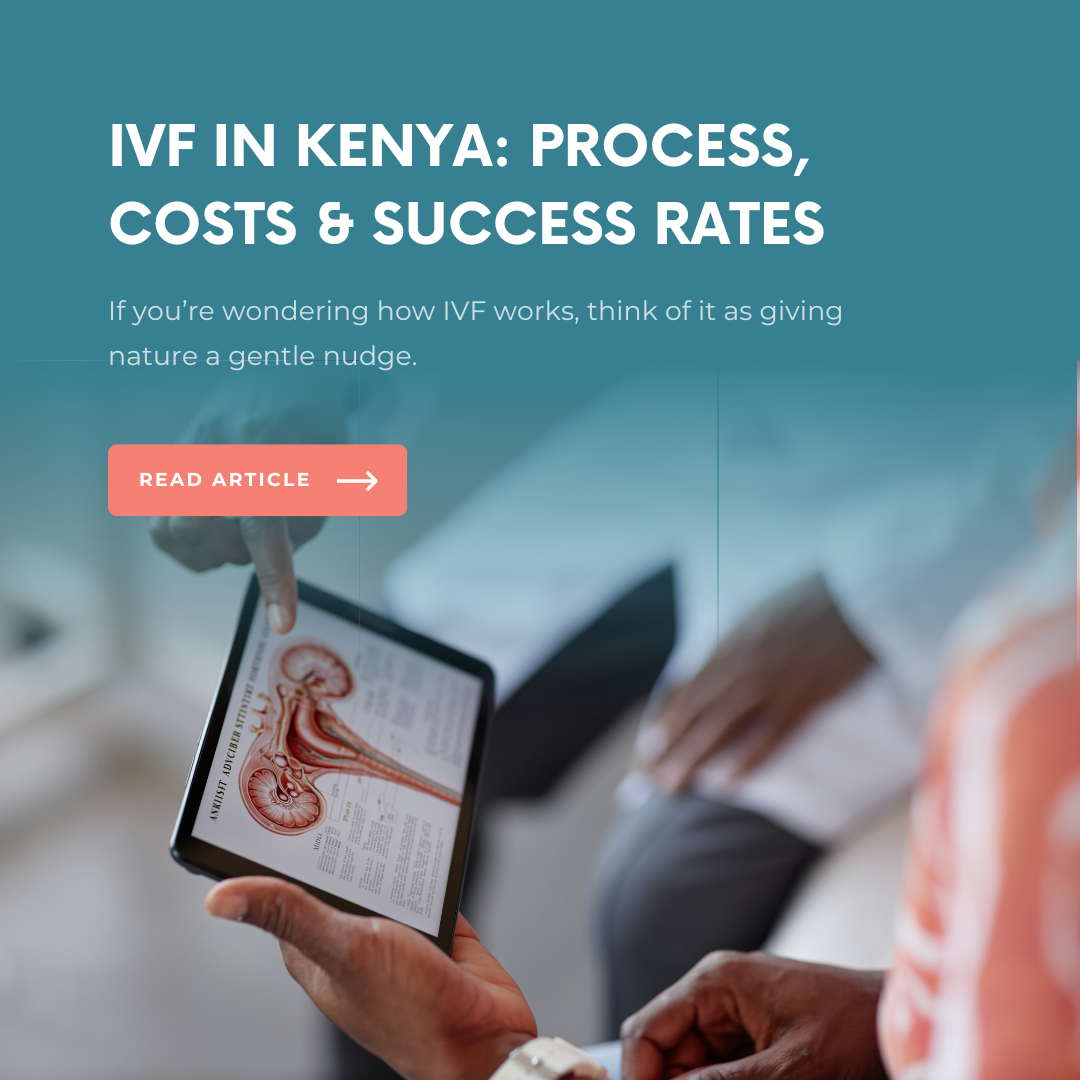
If you’re wondering how IVF works, think of it as giving nature a gentle nudge. Instead of waiting for the sperm and egg to meet inside the body, doctors help them meet in a controlled, safe environment, basically a very high-tech “first date.” Once the embryo has formed, it is placed back into the womb to grow just like in a natural pregnancy. The process usually begins with hormonal medications that encourage the ovaries to produce more eggs than usual. After a few weeks of monitoring and ultrasounds, the eggs are retrieved through a short procedure, combined with sperm, and then the waiting game begins as embryos develop.
In Kenya, IVF isn’t a mystery reserved for the elite anymore. Fertility clinics have grown in number, and couples now have options in Nairobi, Mombasa, Kisumu, Nakuru, and Eldoret. The cost, however, can still feel like investing in a small plot of land. On average, a single IVF cycle ranges from around KSh 350,000 to KSh 600,000, depending on the clinic, medications, tests, and any additional procedures needed. Some clinics offer payment plans, while others allow couples to pay in stages. It’s the kind of bill that makes you briefly question your life choices but still feels worth every shilling when you imagine the outcome.
One of the big questions couples ask is whether IVF actually works. The honest answer is: it depends. Factors like age, underlying fertility issues, and overall health play a huge role. Women under 35 generally have higher success rates, sometimes close to 40–50% per cycle, while for women over 40 the rate can drop significantly. But success isn’t just a number; clinics across Kenya have seen countless stories of hope, resilience, and happy endings. Some couples conceive on the first try, others need two or three cycles, and some choose alternative fertility options like ICSI or donor services.
The emotional part of IVF is something people don’t talk about enough. The excitement, fear, hope, hormones, tears, laughter, it’s a whole roller coaster. Many Kenyan mums describe the experience as one of the most vulnerable yet empowering seasons of their lives. And the support systems around them, from spouses, fertility counsellors, support groups, and even WhatsApp circles, make a huge difference. This journey is not just medical; it’s mental and emotional too.
One thing that stands out in the Kenyan fertility space is how more couples are speaking openly about their experiences. The shame and secrecy that once surrounded infertility are slowly being replaced by community, compassion, and information. People are realising that IVF is not a failure of the body; it’s a modern miracle, a tool that gives couples a fighting chance.
If you’re considering IVF, take your time to do research, talk to specialists, and understand your options fully. Ask all the questions, even the awkward ones. And remember, you’re not alone. Thousands of Kenyan families have taken this road before you, and many are walking it right now.
IVF may not be the easiest journey, and yes, it can test your patience, budget, and emotions. But for many couples, that first cry in the delivery room makes every injection, every clinic visit, and every prayer worth it. If this is the path you’re taking, walk it with hope. Miracles happen here every day.