


For many Kenyan mums, the conversation around a C-section often ends at “the baby arrived safely.” Friends and relatives will say things like “mama na mtoto wako sawa, hiyo ndio muhimu,” and while that is true, it hides a deeper reality. The recovery journey after a C-section is its own mountain, physical, emotional, social, and even relational. It is a journey many women step into blindly because nobody truly prepares them for what happens after the operating theatre.
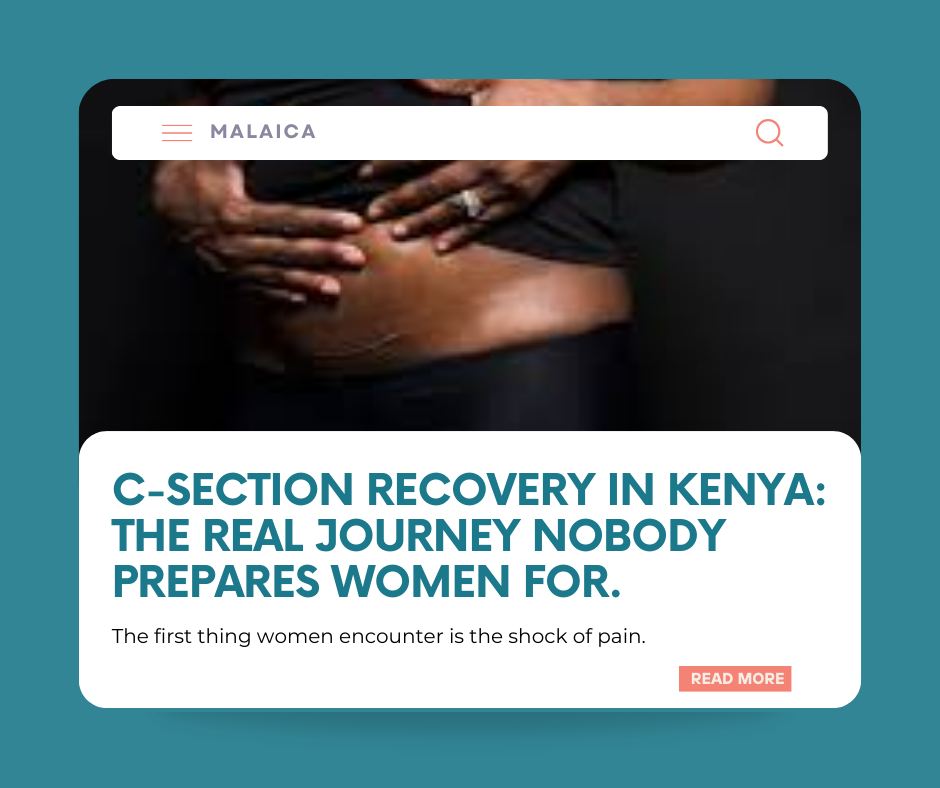
The first thing women encounter is the shock of pain. Not the surgical pain during the procedure, that one you don’t feel, but the pain that greets you hours later once the anaesthesia wears off. It is a pain that makes laughing scary, coughing an extreme sport, and turning in bed an entire project. In Kenya, where hospital stays are increasingly getting shorter due to cost, many mums are discharged before they fully understand how to manage this pain at home. Painkillers help, but what most women don’t know is that consistent movement, even in small amounts, is part of the healing. Standing up for the first time feels like your entire abdomen is about to fall apart, but every slow step is rebuilding strength.
Emotionally, the journey is even quieter and more complex. Many mothers describe the first week as a mix of relief, fear, guilt, and exhaustion. Some struggle with feeling like they “failed” to deliver naturally because of pressure from society or comments from older relatives. Others feel disconnected from their babies at first, not because they don’t love them, but because the body is in survival mode, trying to heal from major surgery. Nobody prepares women for the emotional whiplash. One moment you’re overwhelmed with joy, the next you’re wondering why you feel so low. In Kenya, conversations around postpartum depression are still whispered, yet C-section recovery increases vulnerability to mood changes because healing is slower and more demanding.
Relationships also shift in ways few couples openly discuss. Partners may assume that once mum is home, life goes back to normal. But intimacy takes longer to return, not just physically but emotionally. The incision site pulls, the body feels foreign, and hormones are all over the place. Simple acts like bathing the baby, lifting items, or even getting out of bed require support, which can create tension if partners don’t step in fully. Kenyan households that rely on mums to “run the home” often forget that a C-section is major surgery. It takes intentional communication for partners to adjust, share responsibilities, and maintain closeness without pressure.
Mobility becomes both a challenge and a measuring stick for progress. In the first days, even walking to the bathroom feels like a marathon. Many mums are advised to walk frequently to prevent clots, but they are rarely told how to walk safely, how to rise from bed without straining, or how to manage swelling. Public transport, especially matatus, is another danger zone; sudden stops, tight spaces, and rough rides can make the pain unbearable. This is why a lot of Kenyan women choose to stay indoors for weeks, not just because of cultural expectations like “don’t go outside before six weeks,” but because the world outside is not gentle to a healing body.
Community expectations add another layer that nobody prepares mothers for. The pressure to “bounce back,” host visitors, look cheerful, or resume chores can be immense. Some women are told, “C-section si ugonjwa,” as if recovery should be instant. Others face judgement for not breastfeeding enough because pain slows down milk let-down. In many homes, the unspoken rule is that the mum is still the primary caregiver even when she is physically limited. Yet what women need most during this time is rest, help with household tasks, emotional support, and reassurance that healing is not a race.
C-section recovery in Kenya is a journey of strength, vulnerability, and resilience, one that deserves more honest conversation. It is not just about the scar or the six-week checkup; it is about rebuilding a body that has undergone major surgery, nurturing a newborn, navigating fluctuating emotions, and redefining relationships in a supportive environment. When we normalize speaking about the real recovery process, we create space for mums to heal without shame, ask for help without guilt, and embrace their journey with compassion. This honesty is how we empower women and build a culture where every mother feels seen, supported, and understood.