



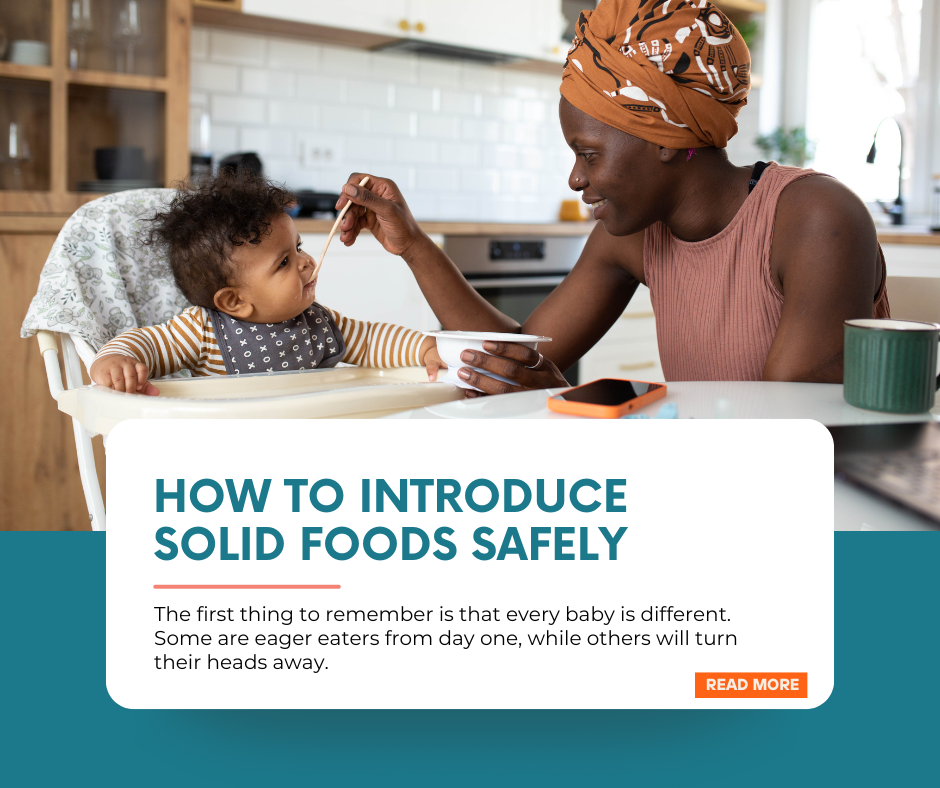
Quick question. Are you planning to go the baby-led weaning route or another way altogether? However you choose to start, planning to introduce solid foods is one of those exciting yet nerve-wracking milestones every parent looks forward to and slightly dreads at the same time.
You’ve survived sleepless nights, learned to read your baby’s cries, and finally gotten into a feeding rhythm. Then, suddenly, it’s time to bring a spoon, or some finger foods, into the mix. But before you reach for the mashed bananas, let’s talk about how to do it safely and confidently.
Introducing Solid Foods Month by Month Timeline
The first thing to remember is that every baby is different. Some are eager eaters from day one, while others will turn their heads away like you just offered them broccoli dipped in vinegar. What matters most is that you introduce solids at the right time and in a safe, supportive environment.
Introducing Solid Foods at Six Months
Most babies are ready around six months, but readiness for complementary feeding is more about milestones than the calendar. Look for signs such as your baby
- Being able to sit up with little support
- Showing interest in your food
- Opening their mouth when offered a spoon
- Having good head and neck control.
Once your little one is ready, start slow and simple. Begin with single-ingredient soft foods like pureed pumpkin, mashed avocado, or iron-fortified baby cereal mixed with breast milk or formula.
When you’re starting weaning, introduce one new food at a time and wait about three days before adding another to watch for allergies or sensitivities such as rashes or unusual fussiness.
Seventh to Eighth Month
As your baby adjusts, gradually move from smooth purees to thicker mashed foods to help them learn how to chew and swallow. Add variety with soft fruits, vegetables, and grains.
By seven to eight months, start offering soft finger foods like steamed veggies or ripe fruit pieces; they’ll love exploring with their hands.
Ninth Month
Around nine months, begin introducing protein-rich options like mashed beans, lentils, shredded chicken, or tiny flakes of fish. Try to move beyond soups to more filling, textured meals that include grains, veggies, and meat.
Related: Download Our Sample Weaning Plan for 6 Months Old: Approved by a Nutritionist
Baby-Led Weaning vs. Spoon-Feeding
And when it comes to the great debate, baby-led weaning versus spoon-feeding, there’s no right or wrong way.
Baby-led weaning encourages independence with self-feeding, while spoon-feeding lets you control portions and texture. Many parents blend both. Follow your baby’s cues and let them explore at their own pace. The goal is to make mealtime safe, nutritious, and fun.
How to Ensure Safety When Planning to Introduce Solid Foods
Safety, of course, should be your top priority. Babies are naturally curious and love exploring textures with their mouths. Solid foods and weaning in general introduces several challenges, such as:
Chocking
Always sit with your baby during meals, and never leave them unattended while eating. Skip foods that pose choking hazards, such as nuts, grapes, popcorn, raw carrots, or chunks of meat. Instead, offer soft, mashed, or finely chopped options that dissolve easily in the mouth.
For baby-led weaning, think of food pieces that are long enough to grasp but soft enough to squish between your fingers like steamed sweet potato strips or ripe banana pieces.
Baby Not Getting Enough Nutrients
When it comes to nutrition, focus on variety. Babies need iron-rich foods after six months, so include options like pureed beans, lentils, egg yolks, or small amounts of shredded chicken. Combine them with fruits and vegetables for balanced meals.
Avoid adding salt, sugar, or honey to baby food. Honey, in particular, can cause botulism in infants under one year. Let your baby experience the natural flavors of food; it’s how they learn to appreciate taste and texture.
Food Allergies
Allergies are another hot topic when it comes to starting solids. In the past, parents were told to delay introducing allergenic foods like eggs or peanuts, but research now shows early gradual introduction (around six months) can actually reduce the risk of allergies.
Just make sure you introduce one allergenic food at a time, and do it when your baby is healthy, not during a cold or other illness. If you have a family history of severe allergies, consult your pediatrician before introducing those foods.
Creating a Positive Baby Feeding Experience
It’s also important to make mealtimes a relaxed and positive experience. Avoid forcing or rushing your baby. Eating should be fun, exploratory, and social. Sit together as a family, let your baby watch you eat, and talk to them about what’s happening.
Babies learn by imitation, so seeing you enjoy food encourages them to do the same. Expect messes, flying spoons, and food smears on cheeks; it’s all part of the learning process.
Ensuring Proper Hydration
Hydration is another aspect parents often forget. Once solids are introduced, you can start offering small sips of water in a baby cup, especially during mealtimes. However, breast milk or formula should still be the main source of nutrition until your baby turns one. Think of solids as a supplement, not a replacement.
Building a Foundation for Healthy Eating Habits
Introducing solids isn’t just about food; it’s about building a foundation for healthy eating habits. It’s a phase filled with trial and error, laughter, and a few gagging scares (which, by the way, are normal as babies learn to move food around in their mouths). Your role is to create a safe space for exploration. Celebrate small victories, like the first time your baby manages to grab a spoon or actually swallows that spoonful of oatmeal without making a face.
Remember, this journey is not a race. Whether your baby starts with purees, finger foods, or a combination of both, what matters most is patience, attentiveness, and love. Every bite, every messy session, every tiny taste is a step forward in your baby’s development.
Speak With a Pediatrician When Introducing Solid Foods
Your pediatrician or nutritionist should always be your go-to for guidance. They can help you tailor a feeding plan that fits your baby’s growth and health needs. What worked for your friend’s baby might not work for yours, and that’s perfectly fine.
Our consultant pediatricians at Malaica Maternity Hospital work alongside with our nutritionists specializing in maternal healthcare to draft personalized weaning plans for your baby’s needs and ensure they’re hitting key development milestones.